Why AI Is Becoming the Operating Layer for Resilient Logistics
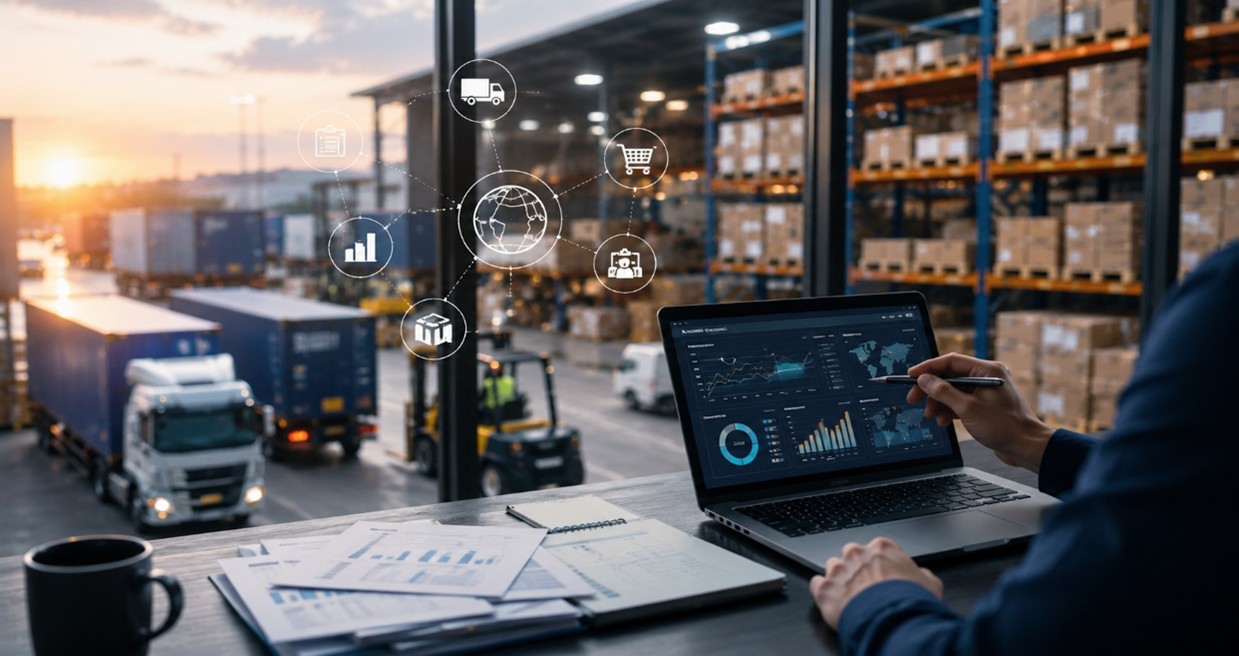
For much of the digital transformation of logistics, the priority was visibility. Companies deployed tracking tools, control towers and analytics to understand where goods were, how inventory was moving and whether plans were being delivered. That infrastructure remains valuable, but it does not by itself make a supply chain resilient.
The strategic issue is now orchestration: can a company detect a developing disruption, evaluate its consequences and coordinate a response quickly enough? AI is becoming central to that question because it can process operational signals at a scale and speed that manual decision-making cannot match.

Resilience needs a sense-and-respond model
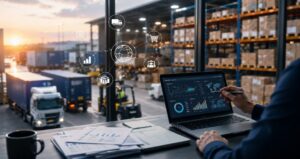
A modern control tower should connect logistics with planning, inventory and execution rather than operate as a reporting screen. In this model, AI identifies patterns and exceptions, while teams focus on interventions that require context, escalation or accountability. The objective is not to automate every decision. It is to direct human expertise towards the decisions where it adds the most value.
This approach also reflects the wider role of logistics in industry. It is no longer only a function for moving products efficiently; it supports continuity when markets, supply conditions or operating assumptions change.
Five practical capabilities
- Real-time response: early signals must connect to timely action.
- Workflow integration: AI support should be available in transport, warehouse, planning and compliance activities.
- Operational scale: trusted data, common processes, governance and ownership form the foundation.
- Human oversight: people retain responsibility for safety, ethics, customers and difficult trade-offs.
- Shared innovation: industrial companies, logistics providers and technology partners need to improve the model together.
The practical test is measurable impact, not technological novelty. More reliable delivery, lower variability and better resource allocation are stronger indicators than an impressive demonstration. Digital twins, advanced analytics and computer vision are part of this expanding toolkit. Schneider Electric is using the control-tower concept to support more connected logistics decision-making.