LogiMAT at 25: the industrial case for connected intralogistics
LogiMAT’s 25-year development in Stuttgart illustrates a broader Industry 5.0 shift: intralogistics is increasingly expected to be connected, adaptable, sustainable and resilient, not simply automated. The exhibition’s growth charts how experimental technologies moved into the operating models of factories, distribution centres and warehouses.
When LogiMAT opened at Killesberg in 2003, it brought together 160 exhibitors and roughly 3,700 visitors. Robots and AGVs were already part of the conversation, alongside RFID, 2D identification, pick-by-light, pick-by-voice and early cloud software. The emphasis was not limited to equipment; the event also used structured exhibitor segments and a substantial programme of technical sessions to connect technologies with business decisions.
Digitalisation became an operating model
The 2004 and 2005 editions highlighted picking processes and voice systems. By 2006, e-commerce, digital logistics and material-flow automation were shaping the agenda. Service-oriented architectures, vehicle fleets, swarm concepts and end-to-end integration followed. These developments mattered because they changed automation from a collection of isolated machines into a coordinated flow of data and goods.
Sustainability entered the programme with energy-efficient intralogistics, greener warehouse construction and lower-impact industrial trucks. Shuttle systems, machine vision, communications, energy storage and robotics then expanded the scope for flexible, scalable installations. For industrial companies, that combination supports phased investment: capacity can grow without replacing the entire architecture.
Resilience joins efficiency
After moving to Messe Stuttgart in 2008, LogiMAT grew from three halls to all ten by 2019. The pandemic forced a digital edition in 2020, while the full physical event returned in 2022. Recent programmes have added artificial intelligence, smart sensors, autonomous robots, drones, cloud-based management and analytics, as well as cybersecurity and supply-chain resilience.
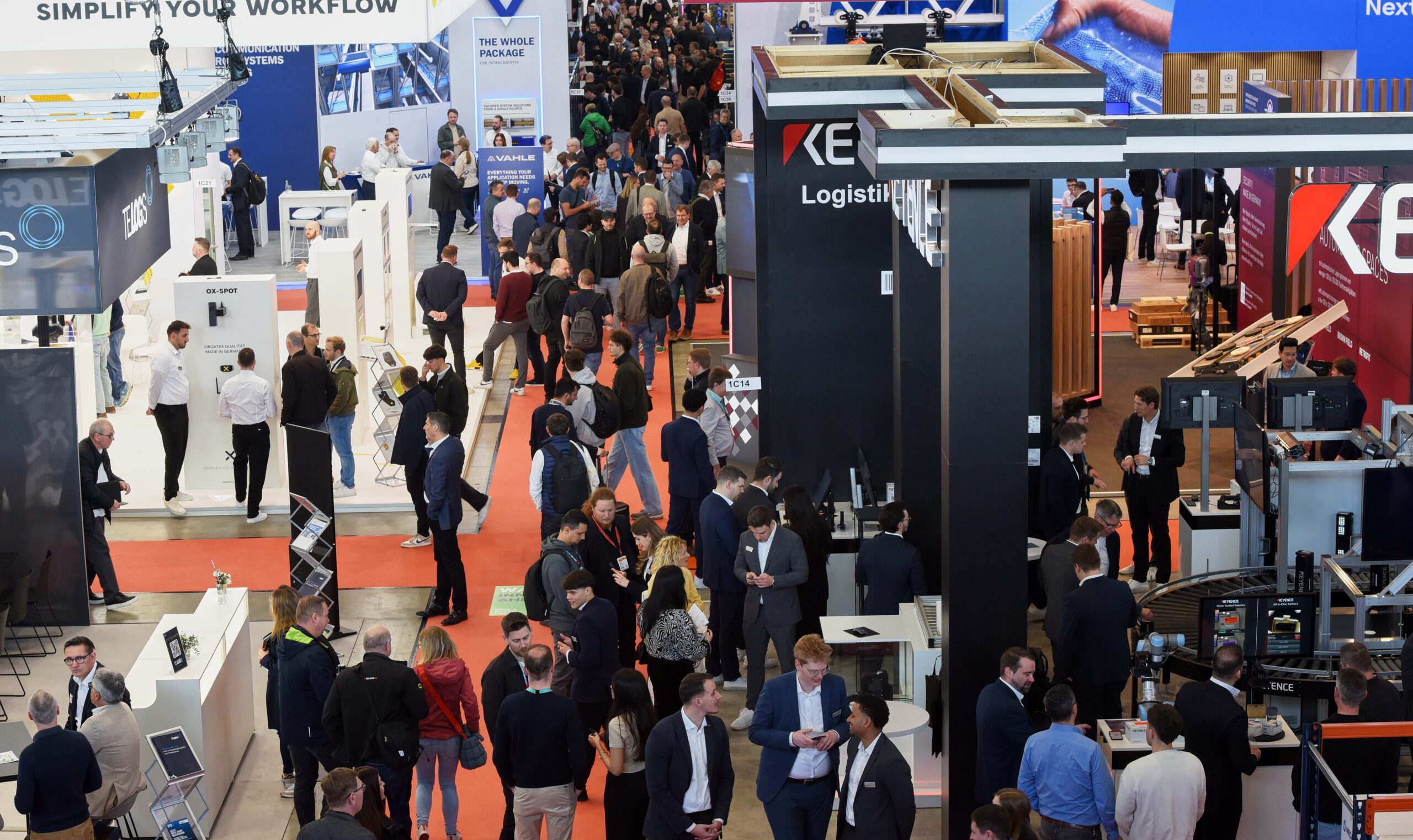
The 2026 event hosted 1,671 exhibitors and 69,856 professionals from an international market spanning 46 exhibitor countries. Its anniversary is therefore a useful signal for Industry 5.0 decision-makers: the next gains in intralogistics will depend on interoperability, energy performance, adaptable automation and the ability to keep critical flows operating under disruption. LogiMAT remains a practical marketplace for those priorities.