A traceable vehicle ecosystem for one of industry’s toughest logistics environments
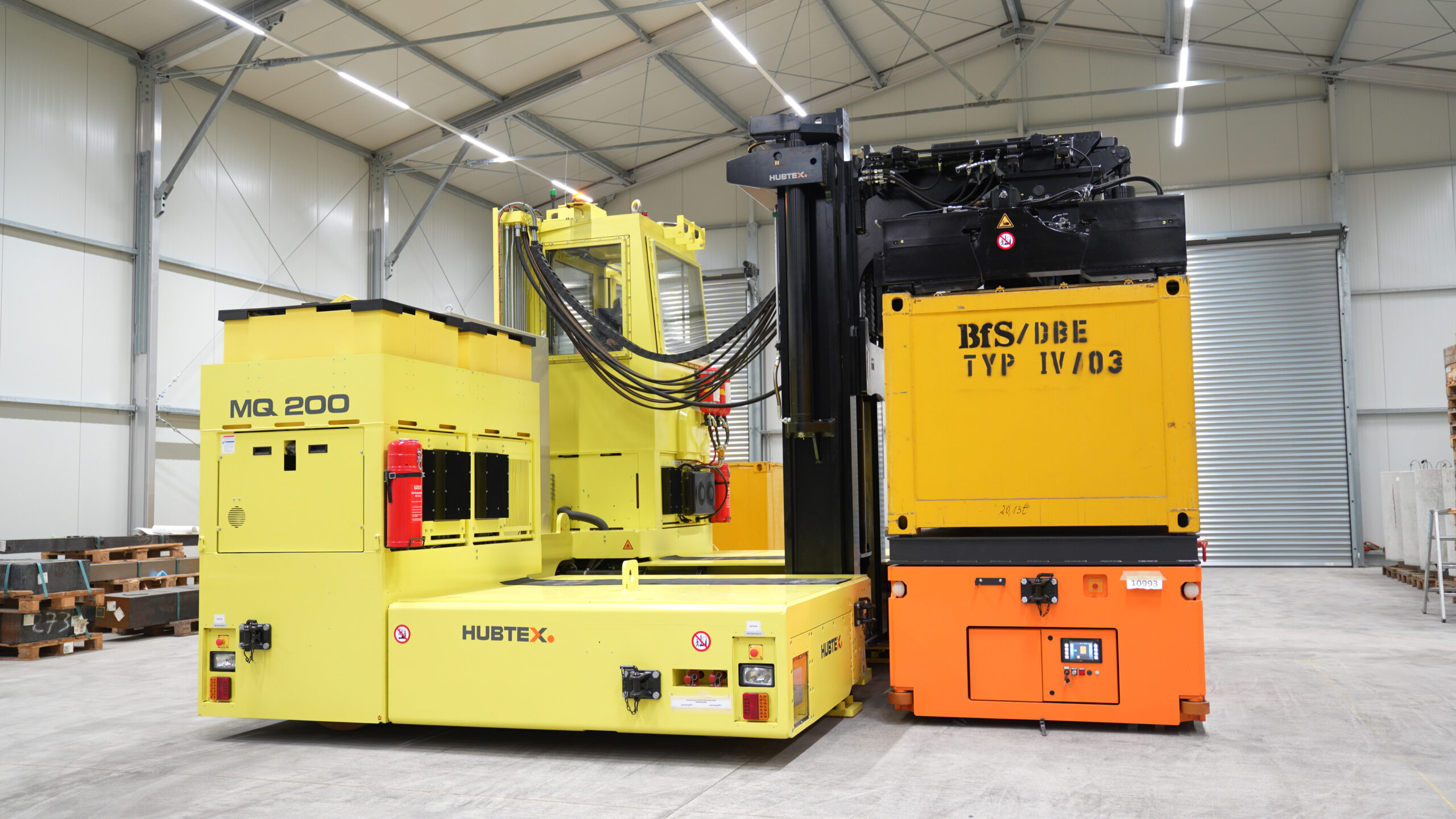
Industrial innovation is often measured by the sophistication of an individual machine. The vehicle programme for Germany’s Konrad repository points to a different model: performance depends on the coordinated behaviour of an entire transport ecosystem.
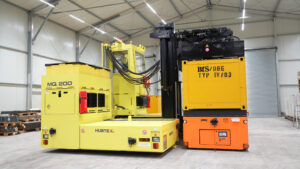
Hubtex is developing five specialised vehicle types for the future handling process of the Federal Company for Radioactive Waste Disposal. Their work will extend from above-ground handling and onward transport to the positioning of low- and intermediate-level radioactive waste at approximately 850 metres underground. The fleet will also deliver fresh concrete and pump-delivered concrete for backfilling storage areas.
Integration is the innovation
The operating environment rules out an off-the-shelf solution. Narrow routes, gradients, high vehicle weights and controlled transfer points create a tightly constrained logistics network. Safety requirements add radiation protection, decontamination, fire-load controls, collision avoidance, protection against potential falls and measures for operator safety.
Hubtex began with the process: mapping routes, interfaces, load transfers, environmental conditions and hazards. That analysis informed new combinations of chassis, steering, lifting and protection technology. Depending on their function, the vehicles may use shielded cabins with lead glass and steel walls, protected ventilation, fire monitoring and extinguishing, emergency steering, positioning systems, optical track guidance, load-unit tracking and communications.
This architecture has a clear Industry 5.0 implication. Digital tools are not being added as a separate layer after mechanical design; they support a controlled relationship between machines, operators, loads and handover points. The objective is not simply movement, but movement that remains reliable, understandable and traceable over the life of the installation. Details of the specialist vehicle approach are available from Hubtex.
Resilience through evidence
Long-term resilience also depends on knowing exactly what was built and tested. Drawings, calculations and inspection plans specify the required condition. Technical changes are evaluated, recorded and approved before implementation, while final documentation reflects the as-manufactured and as-tested equipment.
Quality assurance is embedded in production. Materials, welded joints, assemblies and installations are inspected under defined plans rather than left to a final check. Depending on the stage, BGE representatives and an independent expert work alongside Hubtex’s quality team. Welding and procedure qualifications, together with non-destructive testing, help verify specialised materials, thick sections and joining techniques.
The result is a practical example of resilient industrial digitalisation: customised hardware, human protection, process data and formal verification reinforcing one another. For companies moving hazardous or high-value loads through restricted facilities, that combination may be more valuable than automation considered in isolation.