The resilient warehouse will be automated — but not empty
Automation is reshaping warehouse operations, but the most useful question for Industry 5.0 is not whether people can be removed from every process. It is whether technology can make facilities more adaptable, resilient and productive while reserving human intervention for the work machines cannot reliably standardise.
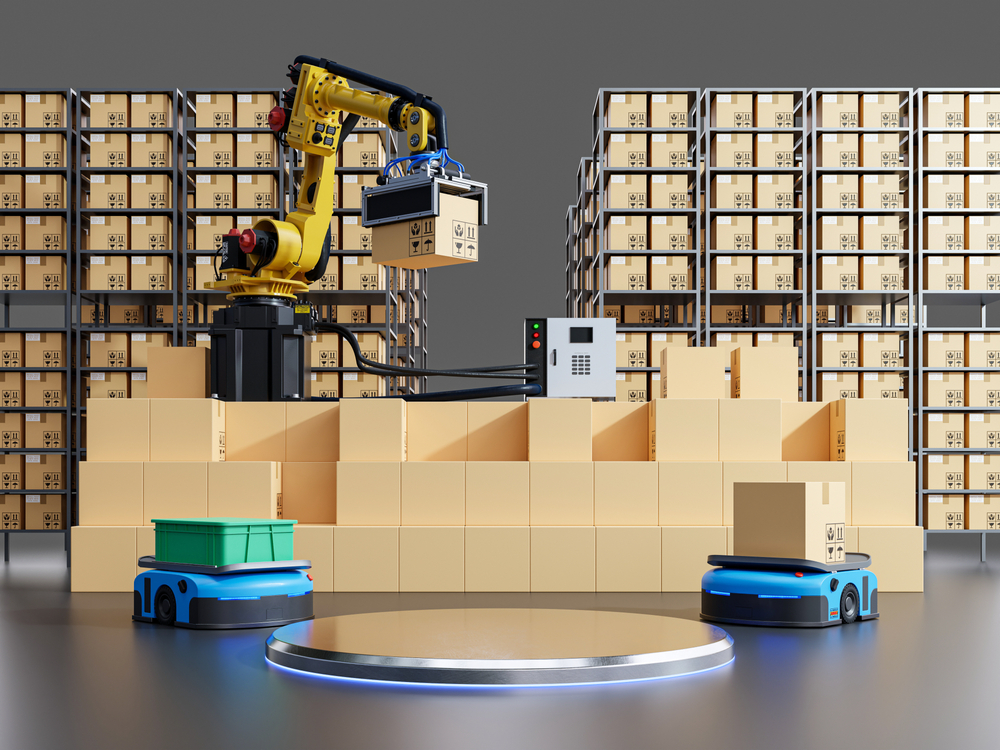
Robotic picking, autonomous mobile robots (AMRs) and automated parcel handling are already changing distribution centres. Yet a robot operating correctly in a repeatable scenario is only part of the challenge. The commercial value of an automated system depends heavily on how it reacts when a product, package or order falls outside its expected conditions.
Designing for uncertainty
Volker Sadowski of BEUMER Group describes exception handling as a potential make-or-break issue. Every case that must be removed from the automated flow for manual assessment can affect throughput, labour requirements and system availability. This makes software, sensing, workflow design and escalation processes as important as the mechanical equipment.
Flexibility has a further strategic role. Fixed automation can be highly effective, but it may require businesses to define capacity and layouts long before demand is certain. AMRs provide a more adaptable model: companies can adjust deployment and workflows as volumes, product mixes or operating requirements change. That ability can support growth while reducing the risk of overcommitting to infrastructure that becomes difficult to repurpose.
Automation with people in the loop
The “dark warehouse” remains difficult because the final part of the job is not necessarily the highest-volume part. Irregular products, unusual parcel conditions and ambiguous picking decisions can be disproportionately expensive to automate. A resilient facility therefore needs a controlled way to bring people into the process when technology reaches its limits, rather than treating every manual intervention as a system failure.
Humanoid robots could eventually extend automation into environments designed for human movement, while automated truck unloading may tackle another labour-intensive operation. Both areas may develop significantly within five years, but they do not remove the need for careful deployment and governance. The practical future of logistics is likely to be an adaptive partnership between machines and workers, supported by digital systems that learn from exceptions and keep operations moving.