Integrated access technology prepares DPD hub for resilient parcel operations
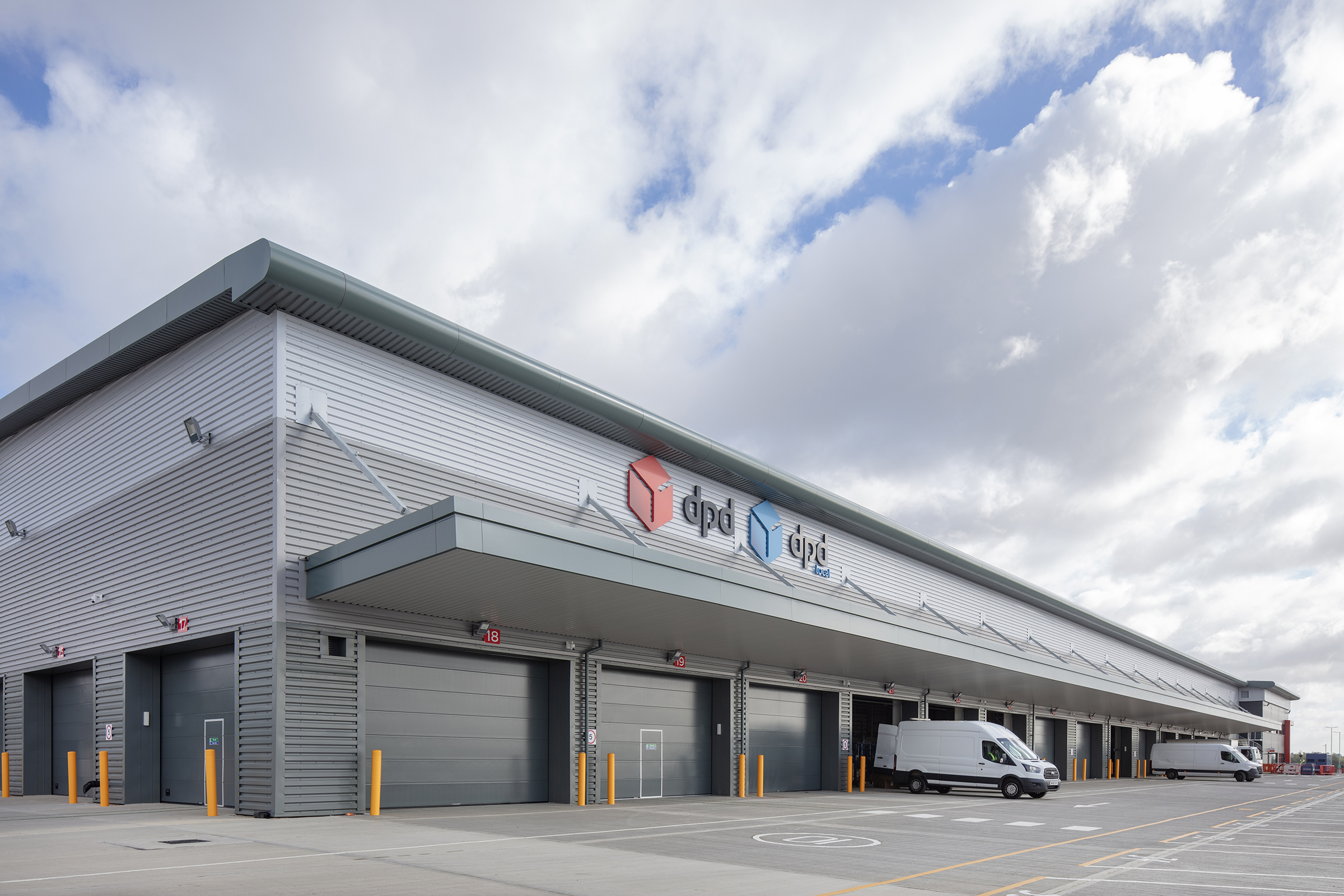
At a parcel distribution centre, the interface between a trailer and a warehouse can become a significant operational constraint. DPD’s new facility at Forrest Park in Newton Aycliffe addresses that interface with a coordinated package of insulated sectional doors and loading-bay equipment supplied by ASSA ABLOY Entrance Systems.
The centre was developed by Barberry, constructed by Caddick Construction and designed by AJA Architects. Its purpose is to increase DPD’s parcel-handling capacity in North East England. Rather than treating access points as isolated building components, the project combines doors, levellers and protective accessories around the requirements of a high-volume logistics operation.
Operational resilience begins at the opening
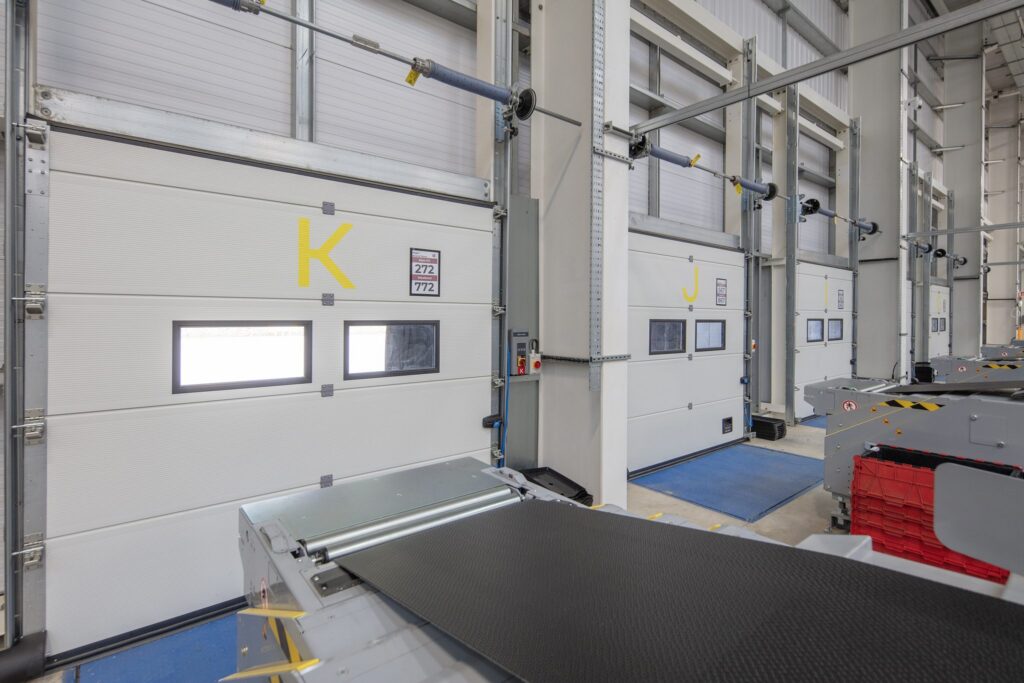
The installation comprises 32 OH1042P insulated sectional overhead doors. Their vertical-lift arrangement keeps the space around each opening available for vehicles and handling equipment. That is a practical design choice in a facility where every access point must support repeated movements without creating unnecessary obstruction.
Twenty-five doors are 6,160mm-wide level-access units serving key warehouse routes. Seven additional doors incorporate centrally mounted pass doors with low 30mm thresholds, panic bars and integrated safety switches. Wind-reinforcement trusses add structural stability, while the insulation of the sectional doors supports the building’s energy-efficiency aims.
Standardised equipment, adaptable vehicle interface
Eleven complete loading bays extend the same systems approach to trailer operations. Each includes an OH1042P dock door with two rows of vision panels and a DL6220T telescopic dock leveller. With a six-tonne load capacity and a 500mm telescopic lip, the leveller is designed to bridge the gap between the warehouse floor and different trailer configurations.
Dock shelters, buffers and wheel guides provide the remaining elements of the interface. The dock levellers are finished in RAL 5010 blue. Together, these components are intended to make loading and unloading more controlled, reduce exposure of goods at the transfer point and improve conditions for drivers and warehouse staff.
The project has a wider Industry 5.0 relevance. It does not depend on a claim of full automation; instead, it demonstrates how human-centred safety measures and robust mechanical systems can reinforce productivity. Clear access, protected transfer points and reliable equipment help operators absorb intensive demand with fewer avoidable interruptions.
For industrial developers, the lesson is to specify the loading envelope as an operational system from the outset. A well-integrated design can support faster vehicle turnaround, safer work and better long-term building performance without adding unnecessary complexity.