Connected execution gives Titan Brands a more resilient fulfilment model
Titan Brands has used a connected supply chain execution model to address a problem shared by many fast-moving retailers: the commercial impact of inventory and delivery decisions made in isolation. After integrating Infios Order Management, Warehouse Management and Transportation Management, the company reduced potential weekly backorder sales losses by 64%, from $1 million to $360,000.
The operational gains extend beyond stock availability. Titan Brands raised the in-stock rate for its top 100 products from 60% to 95%, increased warehouse picking performance by 133% and improved forecast accuracy from 65% to 70%. At the same time, frontline warehouse pay doubled while total labour costs fell by 0.5%.
Digital continuity across a difficult product mix
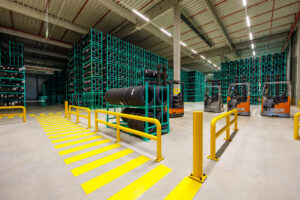
Headquartered in Memphis, Tennessee, Titan Brands runs four distribution centres in the United States and sells almost 3,000 products under Titan Fitness, Titan Attachments and Ash & Ember Outdoors. Heavy fitness equipment, tractor and skid-steer attachments and outdoor goods create different handling and transport requirements from standard parcel merchandise.
Before the integration, order information was largely contained within warehouse operations. Teams used spreadsheets and manual communication to assess stock arrivals, shipping economics and delivery dates. Titan first implemented Infios Order Management and Warehouse Management, then went live with Transportation Management in January 2026.
The connected environment creates a continuous flow between commercial decisions and physical execution. Order Management gives teams a consolidated view of demand, Warehouse Management coordinates fulfilment, and Transportation Management compares rates and books parcel and less-than-truckload services. A label scan can now prompt a live carrier-rate request and booking before the shipment leaves the facility.
Resilience through earlier intervention
The same data is available to customer service, which can view order status, distribution-centre activity and tracking information together. This reduces the delay between a disruption occurring and the business deciding how to respond.
For Industry 5.0 programmes, the workforce result is particularly relevant. Automation and integration did not simply remove labour from the process; higher productivity helped Titan Brands increase frontline pay while lowering aggregate labour costs. The example suggests that resilient operations can combine better use of data with improved working conditions.
Connected execution also offers a practical route to more efficient resource use. Better forecasting and fuller product availability can reduce avoidable order failures, while coordinated transport decisions limit the need for reactive intervention. The Titan Brands case demonstrates that resilience is built not only through additional capacity, but through faster, shared decisions across the value chain.