From blind spots to resilient supply chains: the case for BLE freight tracking
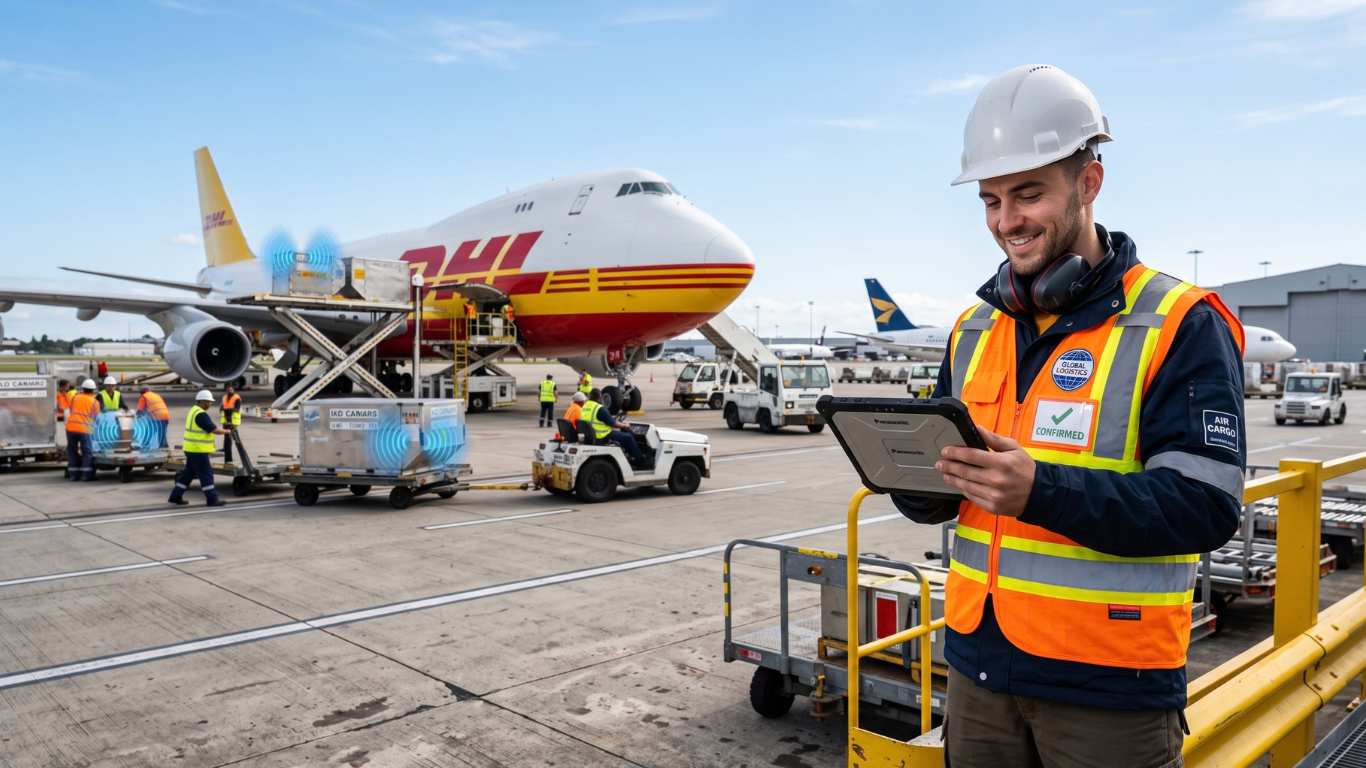
Supply-chain resilience depends on knowing when a delivery is beginning to fail, not simply confirming that it failed. Yet much international freight still crosses a visibility gap between departure and arrival. Multiple carriers, ports, customs processes and handovers generate fragmented updates, leaving manufacturers to plan around estimates.
The operational consequences reach beyond customer service. An undetected diversion can delay production, while a temperature excursion or impact may be impossible to assign to a particular transport leg. Uncertain transit times also encourage companies to hold additional safety stock, tying up capital that could otherwise support production or innovation.
A practical digitalisation step
Conventional GPS tracking offers direct location data but is not economical for every pallet. Its hardware requires a larger battery, costs more and normally has to be recovered at destination. That creates reverse logistics and limits deployment to high-value cargo or reusable transport assets.
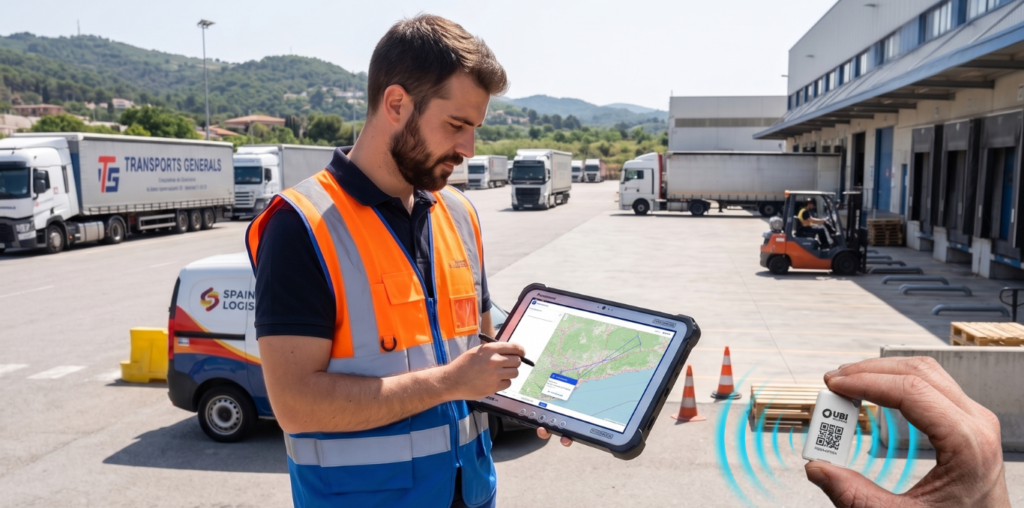
Single-use Bluetooth Low Energy devices offer a lighter model. A tracker weighing a few grams can be attached to a package, linked to an order through a code scan and detected by nearby smartphones, IoT gateways and networks. Location data reaches a cloud platform without requiring every logistics partner to update a shared system.
With UBI Shipping Track, UBI Solutions also supports optional monitoring of temperature, shocks and openings. Alerts can identify a prolonged stop or route deviation while intervention is still possible. The UBI Tracklink web link lets a shipper share live shipment information with a customer, forwarder or receiving site without account creation.
Visibility as infrastructure
This approach does not eliminate GPS. High-value cargo and routes with limited connectivity may still need dedicated tracking hardware. Its significance lies elsewhere: BLE can make direct visibility viable for routine, mid-value freight. That gives industrial organisations earlier warning, better evidence when investigating incidents and a basis for more responsive inventory decisions.
It also supports a more scalable form of digitalisation. Instead of asking every partner to integrate another portal or maintain another status field, the shipment itself becomes the source of operational data. For companies pursuing more resilient and resource-efficient supply chains, that is a modest technology change with potentially broad practical value.