Rethinking warehouse resilience: why impact protection must evolve
Warehouse resilience is often discussed in terms of automation, data and flexible capacity. Yet a basic physical event—a forklift striking racking or a structural column—can still expose weaknesses in the operating model. The assumption that a harder protective barrier is automatically safer is now being questioned.
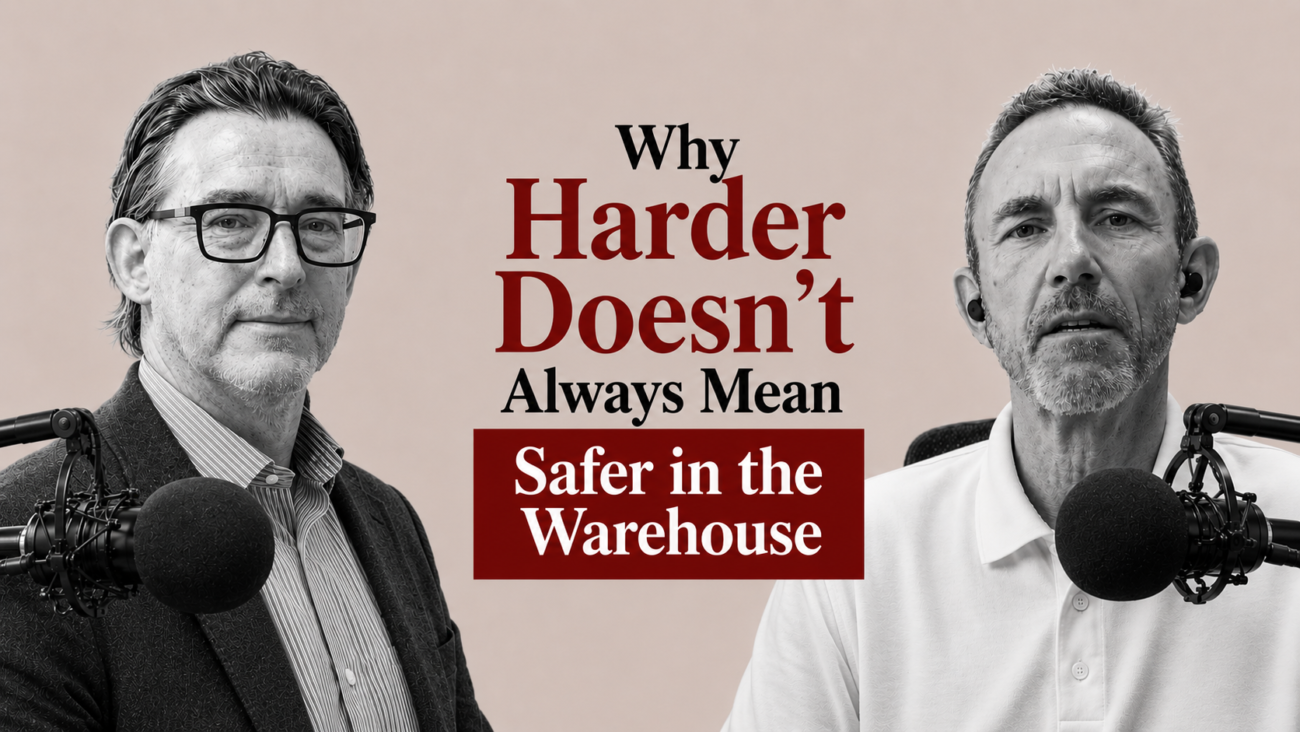
In Logistics Business Conversations, Peter MacLeod explored the issue with Jim Ryan, founder of Sentry Protection Products. Ryan has spent almost three decades developing warehouse protection systems and described how the outcome of an impact depends on more than the strength of the component at the point of contact.
From damage control to operational resilience
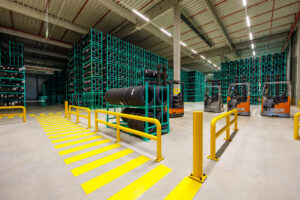
Several tonnes of moving materials-handling equipment can create forces that affect surrounding infrastructure. A collision may involve racking, columns, the vehicle, employees and inventory, while the business impact can extend to inspections, restricted access, lost productivity and downtime. If a rigid barrier redirects forces into another element, the visible protection may conceal a wider problem.
This makes impact protection relevant to Industry 5.0 thinking. Resilient operations need technology that supports people, protects assets and enables recovery, rather than solutions selected on a single specification such as hardness. The design question is how energy is absorbed, how secondary damage is limited and how safely the area can return to use.
Automation does not remove physical risk
The conversation also considered collision avoidance and the growing role of automated and autonomous vehicles. Digital systems can improve control of warehouse movement, but they must operate alongside physical safeguards and practical maintenance routines.
That balance matters for sustainable industrial performance. A straightforward system, correctly matched to the site, may be easier to maintain and more reliable in daily use than a technically sophisticated alternative. The objective is a warehouse that remains safe, productive and recoverable when technology or human movement does not proceed as planned.