From Data to Decisions: AI’s Practical Path Through Logistics
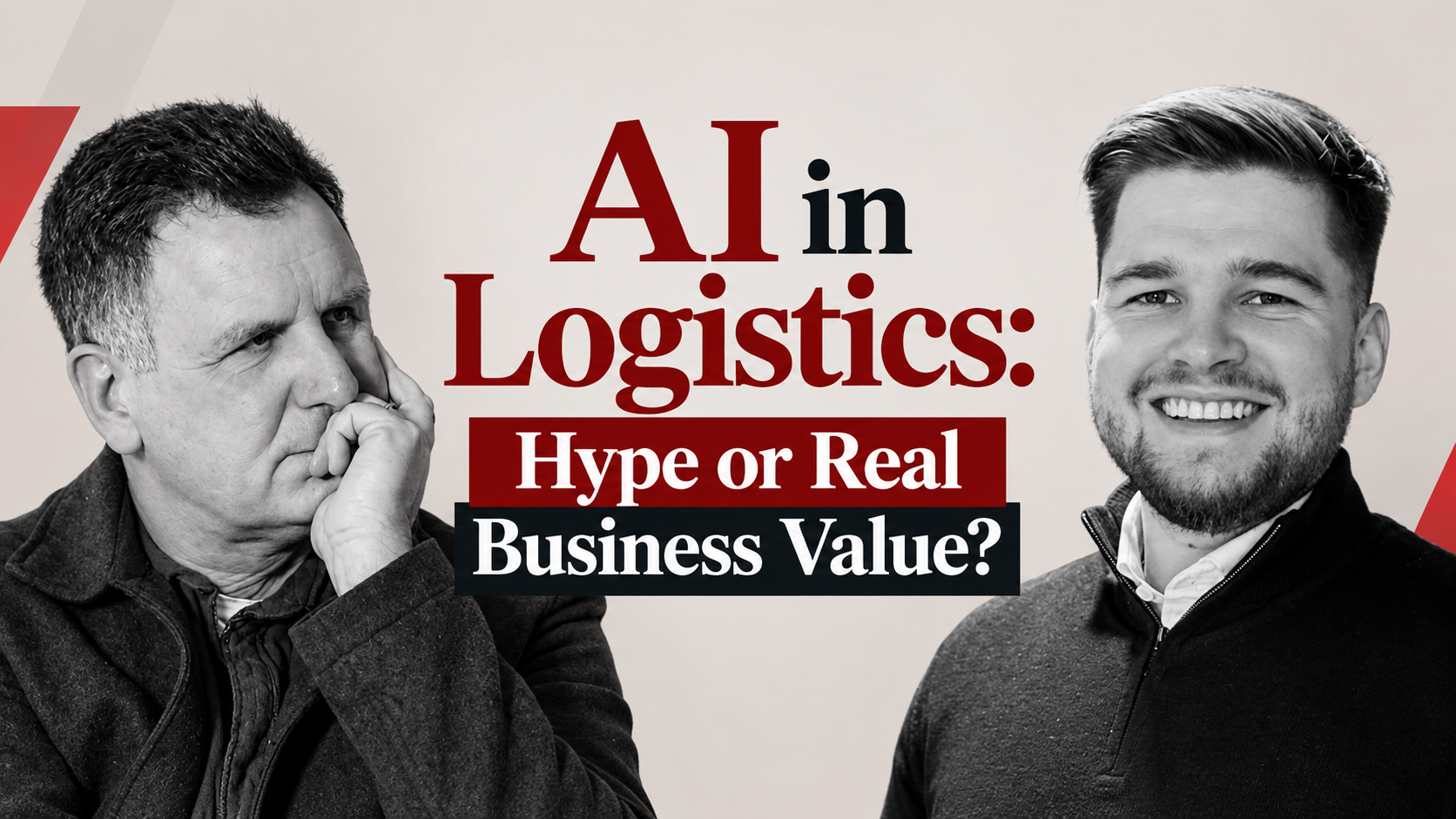
Logistics operators are under pressure to make better decisions with increasingly fragmented operational data. Artificial intelligence is emerging as one way to address that challenge, but its most credible near-term applications are focused on specific processes rather than broad claims of autonomous logistics.
Improving the digital planning layer
Delivery planning often starts with an average assumption about the time spent at a stop. That assumption can be too general for complex operations. Machine-learning models can examine historical deliveries and identify how the product, vehicle, customer and previous performance influence the duration of a particular stop.
Using those patterns, planners can produce schedules that better reflect actual work. More accurate estimates may support on-time delivery and make daily transport plans more resilient to the variation found in real operations. This is a relatively focused use of AI, but it illustrates how digitalisation can improve an existing process without requiring a complete redesign of the transport network.
Safety, compliance and the human factor
Fleet safety presents another opportunity. Operators may collect information through telematics, cameras, compliance systems and spreadsheets, yet the volume of data can make prioritisation difficult. An isolated event should not necessarily trigger the same response as a behaviour that appears repeatedly across journeys.
AI and machine learning can help identify such patterns, direct coaching towards drivers who may benefit most and measure whether the coaching has had an effect. The human role remains important: technology supplies context and prioritisation, while managers and drivers use that information to discuss behaviour and improvement. The intended outcomes include fewer accidents, fewer compliance issues and lower operational risk.
Automation with a defined purpose
Agentic AI could eventually assist transport planners by learning established working methods and handling routine activities. That prospect fits the wider Industry 5.0 emphasis on technology supporting people rather than simply removing human involvement. However, implementation should begin with a clearly defined operational problem. Investments linked to planning quality, safety or compliance are more likely to strengthen resilience than projects adopted because AI is currently fashionable.