Girteka links fleet renewal with safety and operational resilience
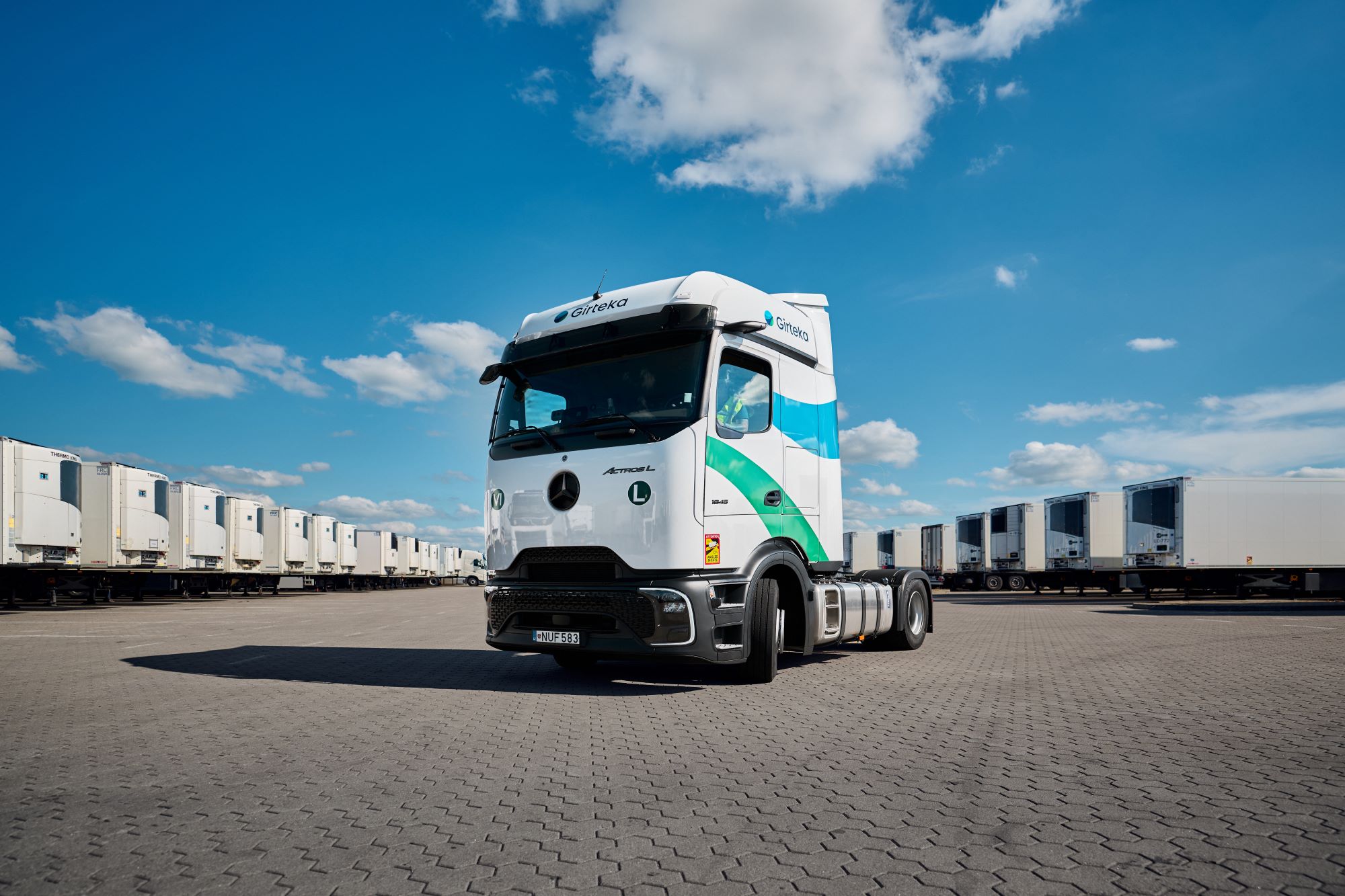
Girteka is using fleet renewal as a wider operational resilience measure, agreeing to acquire 900 Mercedes-Benz Actros L ProCabin trucks. The deal, signed during IAA Transportation in Hannover, extends the company’s established partnership with Daimler Truck.
The delivery plan is staged: 500 vehicles are due to enter Girteka’s fleet in 2026, followed by another 900 in the first half of 2027. The programme allows a major operator to modernise its assets in phases while continuing to serve customers across Europe.

Modern assets, consistent operations
Girteka owns approximately 6,500 trucks, making it Europe’s largest asset-based road transport fleet. At this scale, resilience depends on more than available capacity. Vehicle age and specification influence reliability, safety, efficiency, maintenance planning and the consistency of service delivered across a large network.
The Actros L ProCabin is designed for long-haul transport and includes assistance systems that can monitor the vehicle’s surroundings, warn of possible hazards and support the driver during critical events, subject to system limits. For fleet operators, such technology can help embed more consistent safety practices, although it remains a support layer rather than a replacement for professional judgement.
People and technology in the same investment
The order also highlights the human dimension of industrial automation and vehicle technology. Drivers spend a significant proportion of their working lives in the truck, so cabin ergonomics, comfort and access to modern assistance systems are operational considerations as well as employment issues.
Girteka handles temperature-controlled and high-value freight, where dependable execution is especially important. Its chief executive, Edvardas Liachovičius, said cooperation with leading manufacturers supports the introduction of new technology, better driver conditions and the reliability customers expect. Mercedes-Benz Trucks CEO Achim Puchert said the agreement reflected a shared ambition to improve the efficiency and safety of long-distance transport.
The project does not represent autonomous trucking, and the supplied information makes no claim about a specific emissions reduction. Its practical Industry 5.0 relevance lies elsewhere: technology is being deployed alongside human expertise, standardised processes and safety goals. For large logistics companies, fleet renewal can therefore become a platform for more resilient operations rather than a simple replacement cycle.