A350 freighter enters testing with digital cargo handling at its core
The first A350 freighter has begun its flight-test campaign, bringing a new digital and operational approach to the large-freighter market. The aircraft departed Toulouse on Tuesday, September 29, completing a four-hour-and-10-minute flight to 25,000 feet with a five-person crew that included three test engineers.
The opening phase is assessing basic airworthiness, flying qualities and essential systems. This work will be followed by a wider nine-month test programme, after which the project is expected to move towards European Union Aviation Safety Agency type certification. The first commercial aircraft is scheduled for delivery in late 2027. A second prototype is nearing completion and should enter the paint shop within the next few weeks.
Digitalisation meets physical cargo constraints
The freighter is based on the A350-1000 passenger aircraft, allowing the programme to build on an established widebody platform while adapting the aircraft to cargo operations. A 175-inch-wide main-deck door sits behind the wing, making it possible to work on the main deck and lower holds at the same time. That arrangement can support more resilient turnaround planning when terminal and aircraft schedules are tightly linked.
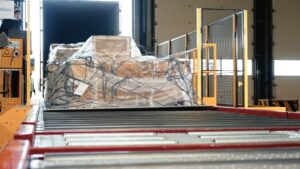
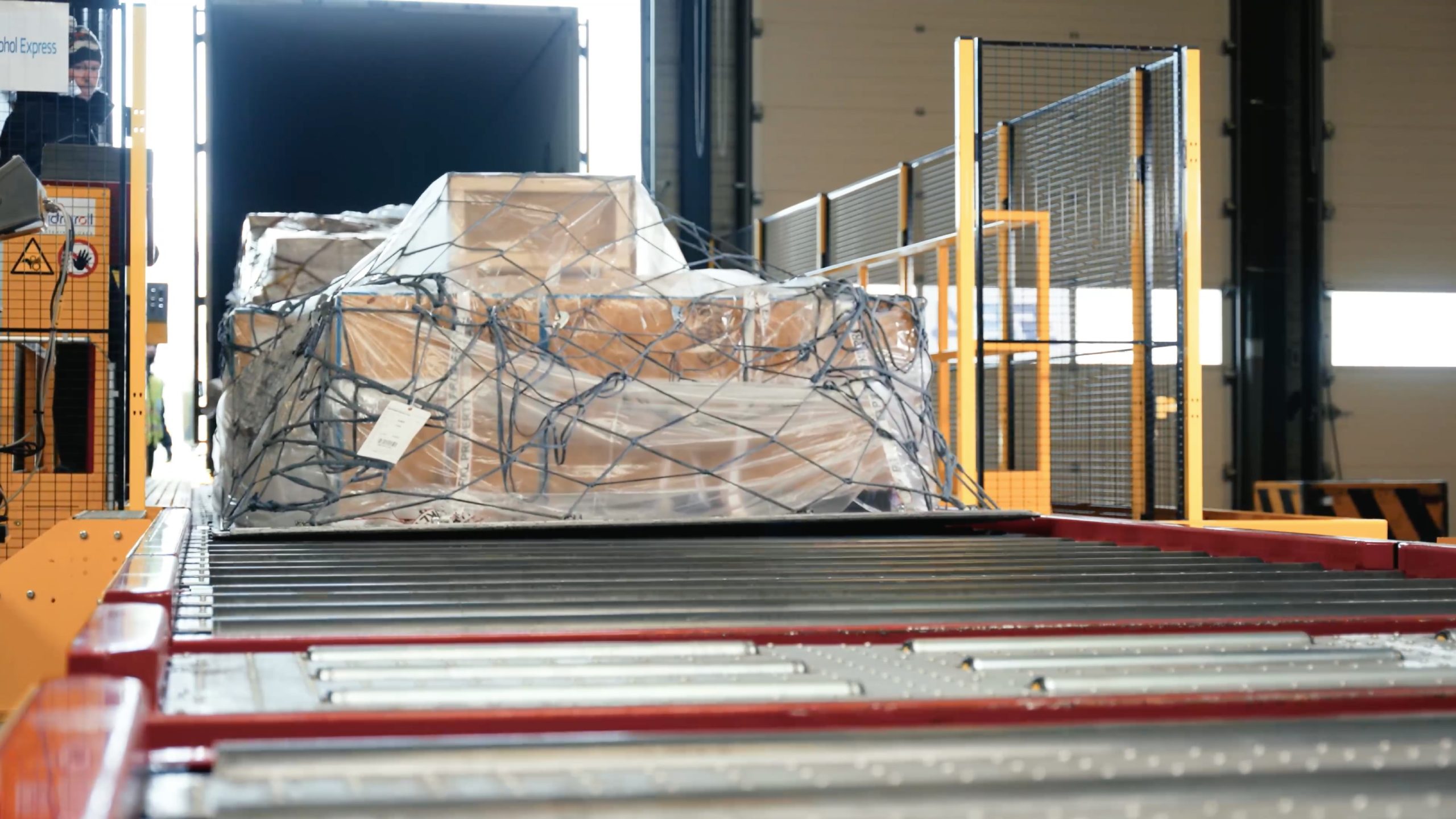
Inside the aircraft, a reinforced metallic floor is designed to withstand cargo handling demands. A digitally controlled loading system positions pallets, creating a technology layer between warehouse processes and aircraft capacity. The freighter is designed for payloads of up to 111 tonnes. Commonality with the passenger version may also reduce the training and integration burden for operators running mixed fleets.
Efficiency and resilience in the freighter market
Composite materials are used extensively to reduce structural weight. The manufacturer says the aircraft could cut fuel consumption and carbon emissions by as much as 40% compared with some older freighters still flying. The claim will be tested through the programme, but the direction is clear: future cargo capacity must increasingly be added without simply increasing the environmental and operating burden.
There are already 103 orders from 14 customers. The aircraft is entering a market shaped by retirements of older freighters, constrained available capacity and evolving international efficiency and emissions requirements. Certification performance will therefore matter not only to airlines, but also to freight forwarders and industrial supply chains that depend on reliable long-distance air cargo.