EAC 212a offers a staged route to pallet-flow automation
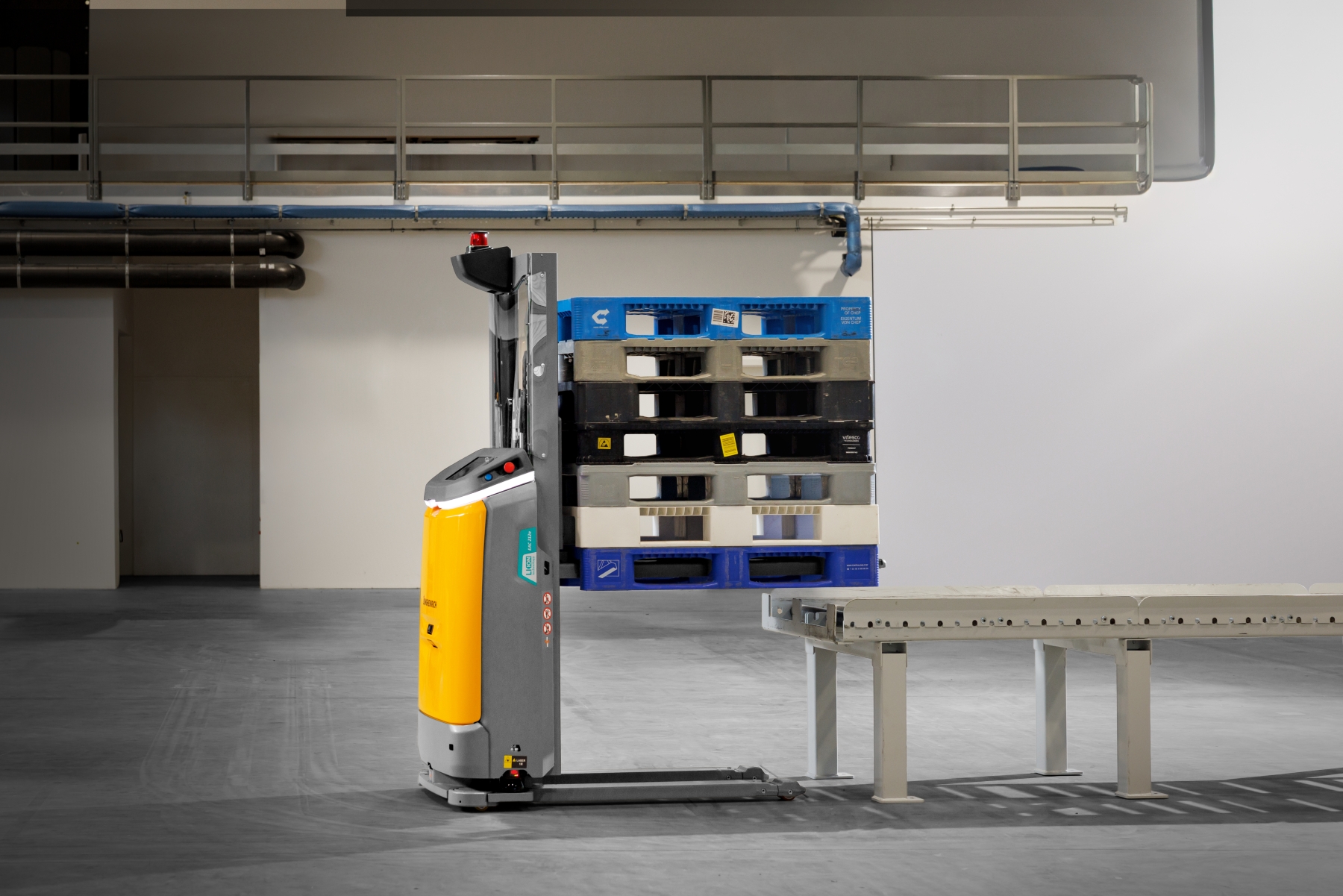
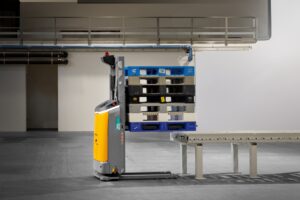
Jungheinrich is positioning its new EAC 212a autonomous mobile robot as a building block for connected industrial logistics. Launched for sale after its presentation at LogiMAT 2026, the robot is designed to transport pallets while using an integrated lifting function to bridge different levels and process areas in a facility.
Its operating scope covers the movement of materials from goods receipt to storage, production and dispatch. The EAC 212a can connect floor storage, block-storage areas, aisles, conveyor systems, automated storage and retrieval systems, and production or packaging equipment. This broad interface model is significant for Industry 5.0 projects, where value often depends on coordinating existing assets rather than replacing them all at once.
Scalability built into the deployment model
Jungheinrich has focused on reducing the infrastructure burden normally associated with automation projects. In many applications, the EAC 212a can be introduced without extensive facility modifications. A company can begin with a single vehicle and a tightly defined transport task, then extend the installation with more robots, process zones and links to wider automation systems.
This approach supports a more measured investment cycle. Operators can test productivity and integration in live conditions while retaining existing equipment, then expand when the operational case is proven. Demonstration and try-and-buy schemes are intended to make that validation possible before a full-scale commitment.
From automation platform to Physical AI
The robot already includes capabilities developed for the EAE 212a. These include automated pallet storage and retrieval in block storage, intelligent allocation of pallet positions, faster storage and retrieval, and recovery functions that allow the vehicle to address certain disruptions independently.
Its software architecture is also being prepared for Physical AI applications. According to Jungheinrich, future capabilities could include camera-based recognition and handling of different load carriers. Such an architecture can improve resilience by enabling the system to respond to more varied operating conditions, although the current launch remains focused on pallet transport.
Frederik Brantner, vice president of robotics at Jungheinrich, said customers had responded particularly positively to the robot’s integration options and application range. For industrial companies, the EAC 212a therefore represents a practical path from a targeted automation pilot towards a more connected and adaptable material-flow system.