DP World pairs port expansion with electric handling technology
Port expansion is increasingly becoming a technology question as well as a construction project. DP World’s latest investment in the UK combines four high-capacity quay cranes with new electric berth infrastructure, targeting both higher throughput and a lower-emission operating model.
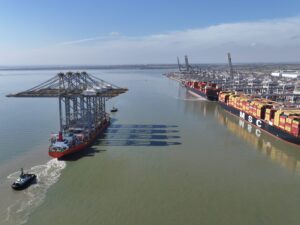
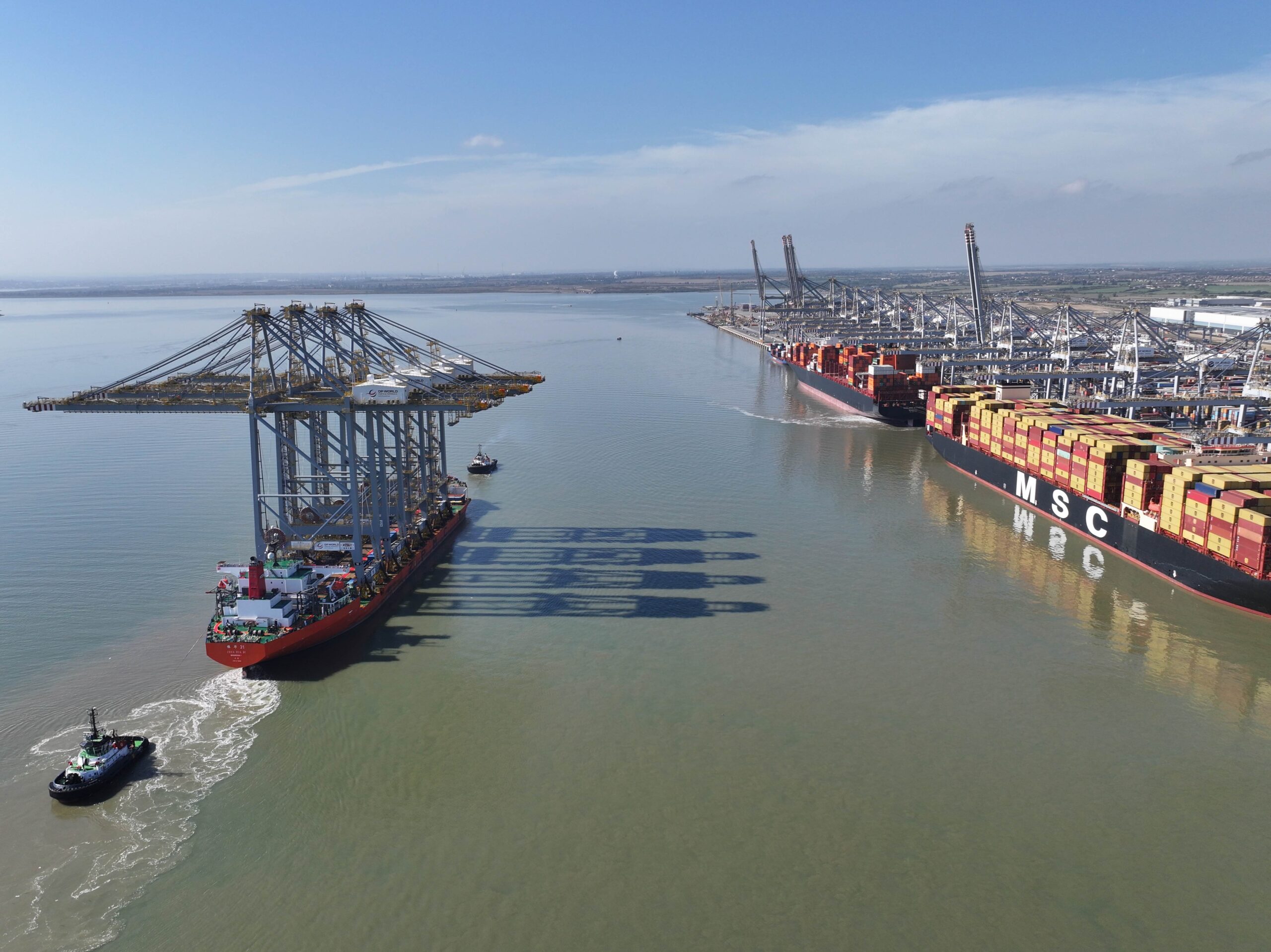
Two cranes have arrived at London Gateway after travelling from Shanghai. At almost 150 metres high and above 2,000 tonnes each, they will serve Berth 5, a new all-electric facility due to open in 2027. Berth 5 forms part of a £1 billion expansion that will also add another electric berth and a second rail terminal; two additional cranes are planned for the berth.
More capacity without simply adding more calls
The cranes can perform consecutive tandem lifts involving two 40-foot containers. This gives the terminal a productivity tool suited to ships of up to 24,000 TEU and helps operators handle more cargo during each vessel call. Southampton will receive the other two cranes after already taking delivery of a pair in June. Its fleet will rise to 16 quay cranes, following a £60 million investment in four units this year.
For industrial supply chains, the practical benefit is greater resilience at the gateway. Higher handling capability can reduce pressure during peak periods, support more predictable schedules and give shippers additional options when routing international cargo.
Electrification as part of the system
The investment also links equipment decisions with wider infrastructure planning. London Gateway’s expansion is expected to make it the UK’s largest container port before the end of the decade, while Southampton continues to connect British businesses with Asia, the Middle East and the Americas.
DP World reports that London Gateway and its logistics park support 10,500 jobs and contribute £799 million to UK GDP. The company says its two UK port operations handle 46% of the country’s containerised trade.
Electric cranes do not by themselves create a net-zero port, but they are a concrete step towards that objective. Their deployment supports the Port of London Authority’s net-zero ambition while showing how future terminal capacity is likely to combine electrification, specialised lifting equipment and stronger rail integration.