Autonomous freight moves closer to routine industrial operations

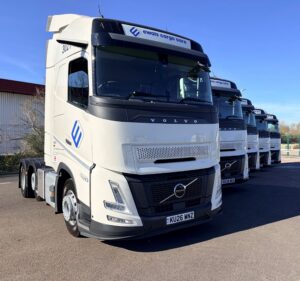
Autonomous freight is being developed through a carefully bounded industrial use case in Texas. Kodiak plans to carry IKEA goods without a human in the cab on a 219-mile section of Interstate 45 later this year, linking the Houston and Dallas areas.
The service will operate within a longer 292-mile logistics connection between IKEA’s distribution centre in Baytown and its store in Frisco. Its significance lies less in the distance alone than in the structure around it: a known shipper, a repeatable lane and established collection and delivery points. Those conditions allow the technology and the wider operating model to be assessed together.
From autonomous vehicle to autonomous process
The planned deployment follows four years of supervised autonomous deliveries. More than 1,300 loads were completed over 750,000 miles with a safety observer present. Kodiak used the programme to build operational knowledge covering dispatch locations, arrival timing, dock scheduling and vehicle maintenance.
For Industry 5.0 adoption, this broader view is important. Automation must support people and processes across the value chain, not simply replace a driving task. Warehouses need predictable handovers, transport planners need reliable arrival information and maintenance teams need procedures for vehicles operating with less direct human supervision.
The project could also provide a practical basis for improving resilience. A repeatable autonomous lane may help companies examine how freight capacity is allocated, how driver resources are deployed and how distribution networks are designed. However, those benefits depend on safe and consistent performance across the complete journey.
Formal evidence remains the critical milestone
Driverless operation is conditional on a highway safety case for the defined area. Kodiak reported that 93% of the required evidence and claims for long-haul operations were materially complete at the end of August, compared with 84% in February. The company expects to complete the work and start driverless operations by the end of 2026.
Kodiak has already conducted driverless deliveries between its Lancaster, Texas, hub and Houston. It said the safety observer did not need to intervene, including when the vehicles travelled on surface roads. The company also runs driverless trucks commercially in the Permian Basin, although those vehicles are not expected to move onto public roads until early 2027.
The next stage therefore depends on more than technical capability. It requires a documented safety argument, operational discipline and cooperation between the autonomous freight provider and the industrial customer. That combination may become the template for wider adoption in manufacturing and retail logistics.