Rotterdam field lab links hydrogen handling with industrial skills
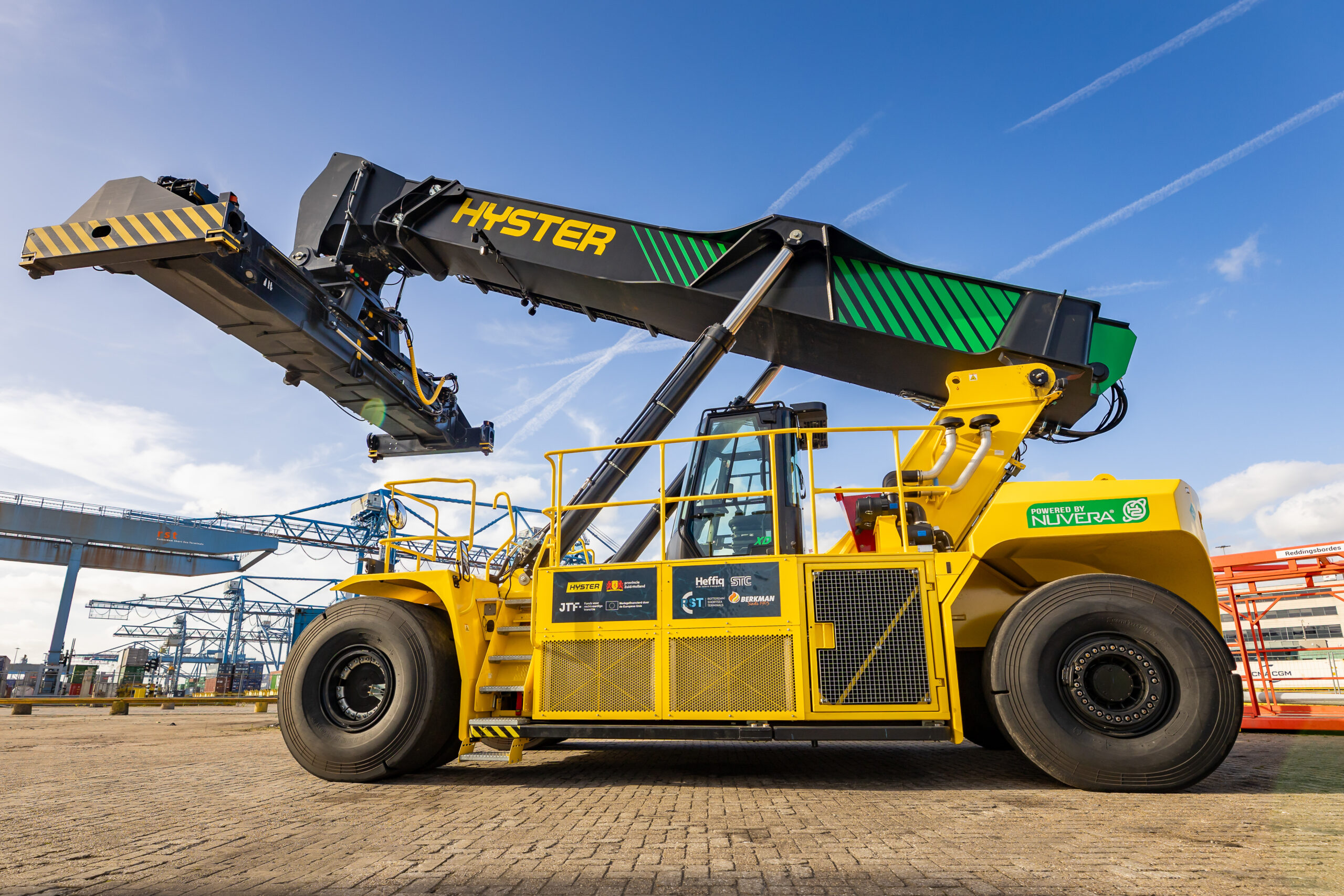
Rotterdam Shortsea Terminals (RST) has become the operating site for a hydrogen fuel-cell reachstacker, turning a decarbonisation concept into a live industrial test. The Hyster RSJ46-33XDH/62 will handle 45-foot containers, including open-top units, with a purpose-built 45-foot spreader.
Its power system pairs a 60kW Nuvera fuel-cell engine with a 130kWh lithium-ion battery. That combination is designed for an application where equipment must deliver substantial handling performance while eliminating tailpipe emissions. The machine also uses Hyster’s standard software architecture for electric products, creating continuity in operator controls, diagnostics and service processes.
A connected energy and logistics system
The deployment sits within a five-year innovation project supported by the Province of South Holland and the EU Just Transition Fund. RST, Berkman Energie Services, Hyster, STC Next and HarbourHUB are building a field lab around two linked technologies: the H2 reachstacker and a modular hydrogen refuelling station developed in the Netherlands.
This arrangement is significant because it tests more than the vehicle itself. The partners want to understand how hydrogen can be incorporated into logistics and industrial workflows independently of the electricity grid. Live terminal operation should expose practical requirements for refuelling, uptime, maintenance and integration with existing processes.
For industrial organisations, the project illustrates a systems approach to energy transition. New equipment delivers limited value if fuel supply, diagnostics, servicing and user competence are not developed alongside it. Hyster and authorised dealer Heffiq are supporting the machine in the field, combining manufacturer expertise with local port-service capability.
People and infrastructure move together
The programme includes a joint experience centre for employees, students and logistics professionals. Training will address hydrogen safety and efficient operation, connecting technology deployment with the skills needed to run and maintain future industrial assets.
The project is co-funded by the European Union and is intended to contribute to CO₂ reduction, future regulation and standardisation, as well as a stronger energy balance in the port. Its most useful outcome may be operational knowledge: evidence that helps companies decide where hydrogen, battery power or a combination of technologies fits their own material-handling requirements.