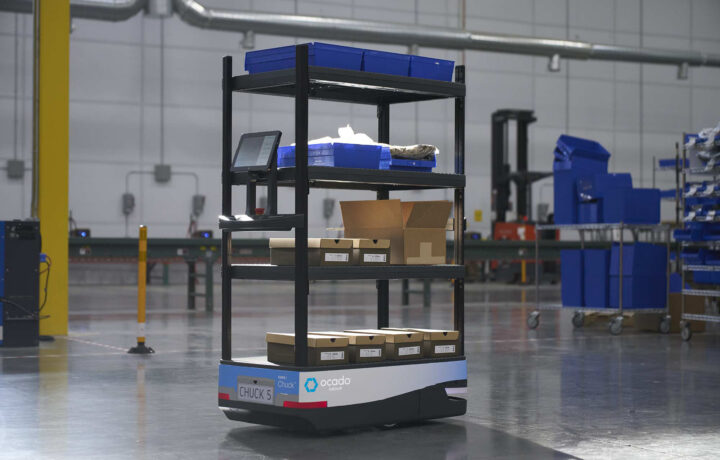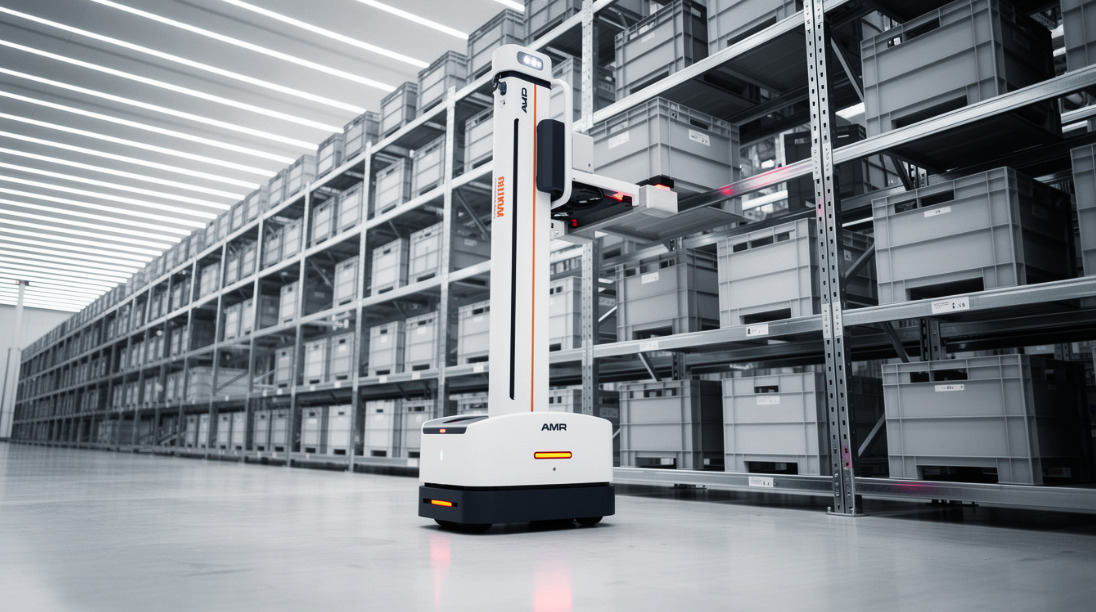
Autonomous mobile robots are helping manufacturers and logistics operators automate material movement without committing to fixed routes. Their flexibility is also broadening adoption beyond industrial sites, including hospitals and airports. As deployments become more demanding, drive design is emerging as a practical enabler of Industry 5.0 goals: adaptable automation that works safely alongside people.
A robot’s drive system brings together the motor, gearbox, brake, encoder and controller. It determines whether the machine can carry its intended payload, position loads accurately and complete its duty cycle without excessive battery demand. Good control is also essential when the robot shares space with workers or operates an arm, gripper or other onboard tool.
Safety and maintainable integration
Safe Torque Off is a core protective function. It disables the drive power stage so the motor cannot produce active torque when propulsion must be removed. A dual STO arrangement uses separate hardware inputs; interruption of either signal blocks the motor switches and increases fault tolerance.
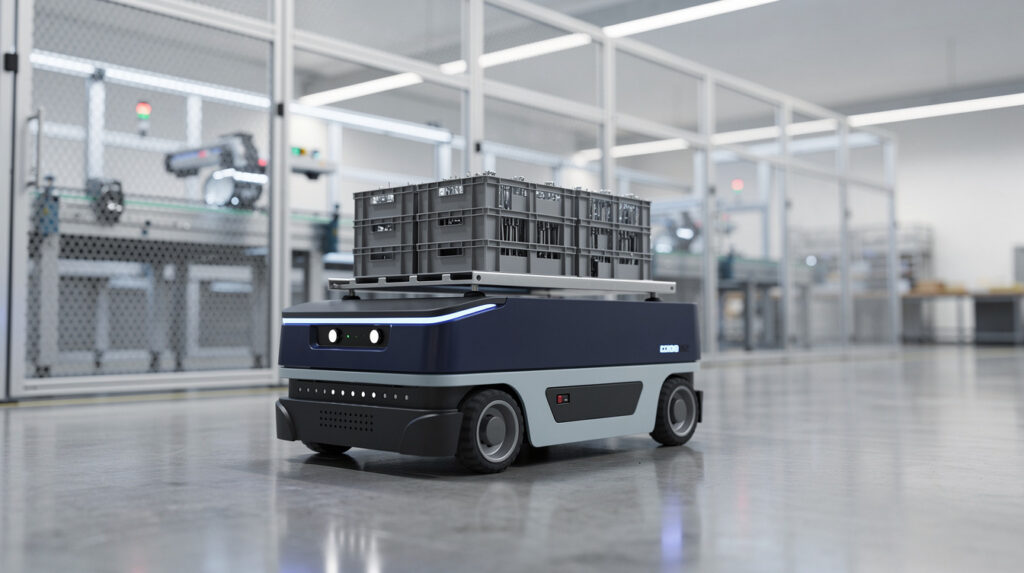
Integrated wheel drives can support more resilient development processes. By combining the principal drive components in a pre-engineered assembly, manufacturers can reduce interface risks, verification work and dependence on internal integration capacity. This can be valuable when industrial companies need to scale robot fleets or adapt platforms to several applications. Individual component selection remains possible where the duty cycle or mechanical envelope is highly specialised.
Efficiency is a system-level decision
High torque density allows a smaller and lighter robot, potentially leaving more capacity for goods while improving acceleration and manoeuvrability. Brushless DC motors are a common starting point because their stationary windings can be cooled efficiently. Frameless designs remove conventional housing and shaft components, reducing mass and opening space for cabling.
There is no universal motor choice. Iron-core BLDC motors can suit low-speed traction, while coreless versions eliminate iron losses and may perform well at higher speeds. Correct sizing is crucial: an oversized motor may reduce losses but adds cost, mass and footprint. Winding selection likewise affects heat, energy consumption and service life.
Transmission technology adds another trade-off. Planetary gears combine compactness with high torque capacity. Strain-wave gears can achieve large single-stage ratios, low friction and zero backlash, supporting precise, repeatable motion. Multi-axis controllers coordinate four or more wheel motors and provide programmable torque, speed and position loops. Specialist guidance from Maxon UK can help companies align these choices with energy, safety and lifecycle objectives.