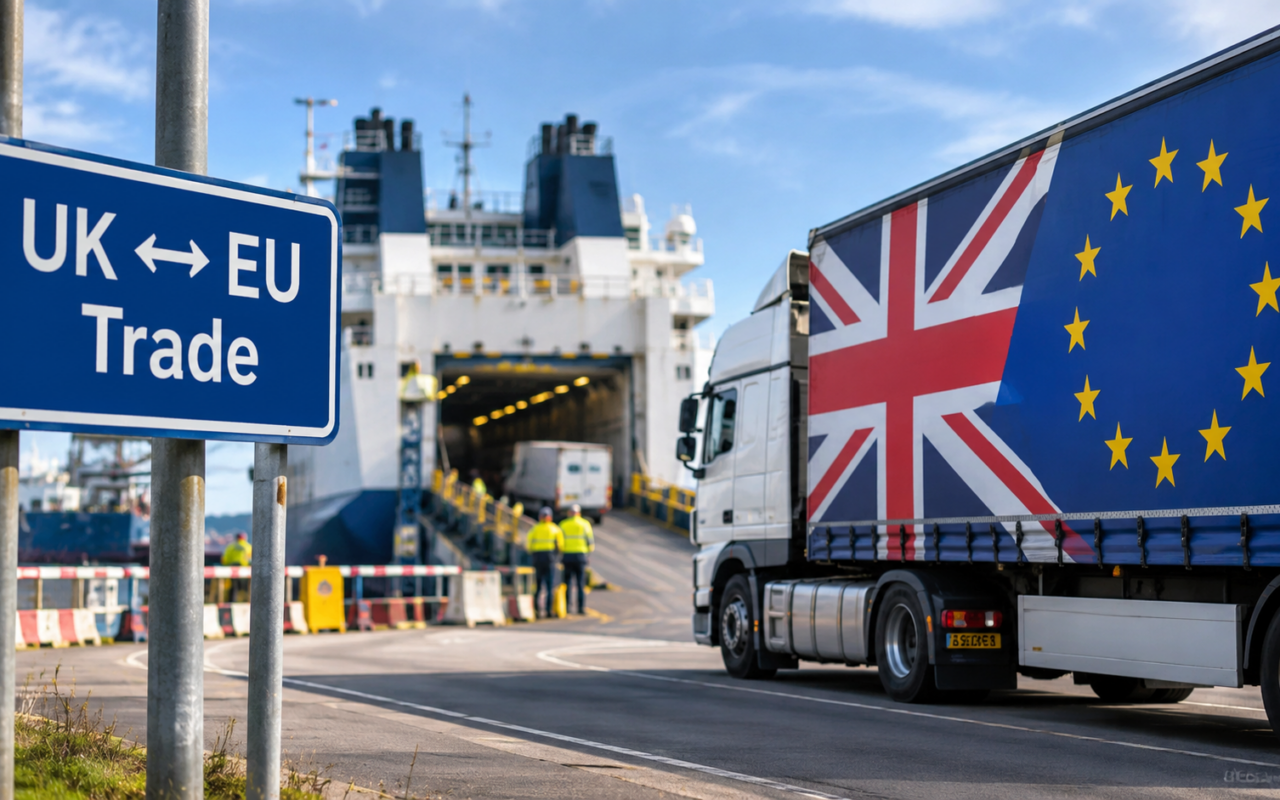
Trade friction is often measured at the border, but its effects spread through production schedules, inventory decisions and customer commitments. That is why progress at the UK-EU Summit matters beyond customs departments. Proposed changes to food and agricultural controls could eventually give industrial supply chains a more predictable route between the two markets.
Negotiations on a Sanitary and Phytosanitary Agreement have concluded, with implementation targeted from March 2028. The framework is intended to reduce checks and certification requirements for relevant agricultural and food products. Fewer interventions could help freight forwarders coordinate transport more reliably and allow manufacturers and distributors to plan inbound and outbound flows with greater confidence.
Resilience depends on implementation quality
The British International Freight Association has welcomed the direction of travel but says the operational detail will determine the outcome. Steve Parker, its director general, said businesses would need time to modify systems, processes and customer arrangements, and called for clear guidance and close engagement with companies involved in cross-border trade.
For industrial organisations, preparation may involve more than changing a checklist. Compliance data, electronic documents, shipment instructions and interfaces between enterprise and transport systems may all need review. A well-managed transition would give companies time to test new data rules, train staff and coordinate suppliers, carriers and logistics intermediaries.
This is also an opportunity to use digitalisation selectively. If requirements become simpler and more standardised, firms may be able to reduce manual document handling and improve exception management. Automation, however, can only work reliably when the underlying regulatory logic and data fields are stable.
Carbon rules add a sustainability dimension
BIFA has separately welcomed progress towards linking the UK and EU Emissions Trading Systems. The proposed link could simplify carbon-related trading obligations and reduce potential costs for companies affected by Carbon Border Adjustment Mechanisms.
That development connects trade efficiency with sustainability reporting. Industrial companies will need to understand the final scope, timetable and reporting requirements before deciding how much compliance activity to automate. The EU dimension will remain important for businesses serving customers or suppliers across the bloc.
Together, the initiatives offer a possible reduction in administrative friction and carbon-related complexity. Their contribution to resilient, digitally enabled supply chains will depend on practical guidance arriving early enough for companies to redesign processes without disrupting live operations.