Warehouse automation is often designed around a forecasted peak that may take years to materialise. Linde Material Handling is taking a more incremental approach with two new platforms: S-MATIC cube for pallets and S-MATIC bin for small-item fulfilment. Both are intended to let operators expand capacity or throughput as operational conditions change.
For industrial companies, the proposition goes beyond labour substitution. A modular installation can reduce the risk of committing building space, equipment and capital before demand is certain. It can also support a more resilient response to volatile order profiles, particularly in e-commerce, contract logistics and businesses with fragmented product ranges.
Dense storage with software control
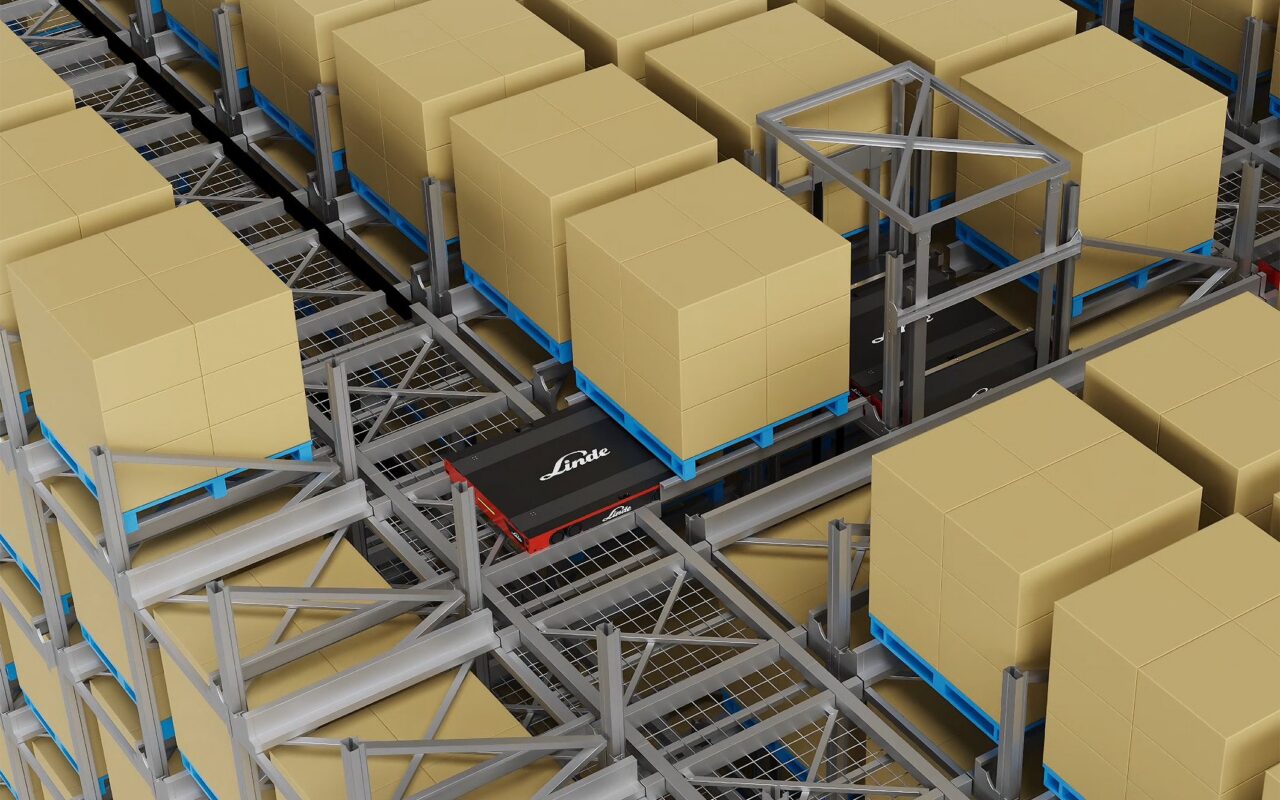
The S-MATIC cube stores pallets weighing up to 1,500kg. Four-way shuttles move pallets inside rack levels and two-way shuttles transfer them vertically. Storage capacity and handling performance are treated as separate variables: additional channels create more positions, while extra shuttles increase throughput.
The rack is self-supporting and can be installed on a standard concrete floor, making the concept applicable to existing buildings. An eight-metre ceiling is sufficient for up to ten levels, while custom projects can reach 40 metres. High density is particularly relevant to deep-freeze operations because reducing air volume can reduce cooling demand and associated operating costs.
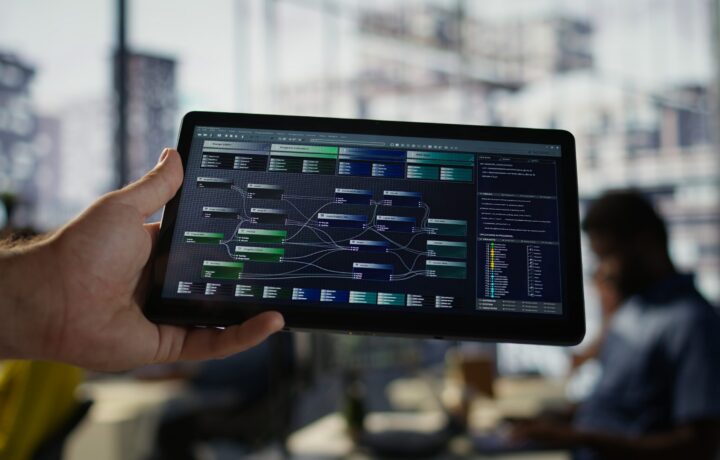
Linde Warehouse Manager applies AI-based algorithms to allocate pallet locations, with the objective of improving occupancy and avoiding bottlenecks. Interfaces support connections to ERP and warehouse management systems, as well as material-handling equipment. Conveyors, industrial trucks and AMRs can be used to connect the storage system with production or picking.
Flexible automation for small-item flows
The S-MATIC bin applies a different architecture to piece picking. Robots retrieve containers from racks up to 12 metres high, and mobile bin movers take them to configured workstations. Because the transport paths are not tied to fixed conveyors, the layout can accommodate changing processes, including bin-to-bin picking, empty-container exchange and mixed picking from bins and pallets.
Depending on the process design, each workstation handles 400–600 order lines per hour. Linde says capacity can be up to 300% higher than in manual systems. The mobile units operate at up to 4.5m/s and for as long as 11 hours per charge, handling cartons, containers and trays up to 800 by 600mm.
Both systems also illustrate a practical Industry 5.0 principle: automation is introduced as an adaptable production asset rather than a fixed, one-off project. Operators can scale the technology when demand rises, while software integration and multiple transfer options preserve flexibility across the wider facility.