Warehouse automation is often treated as a one-time infrastructure decision, even though demand, product ranges and customer portfolios continue to change. Rainbow Dynamics, FarmaSort and Collo-X are promoting a different model: start with a defined operational need, then expand the system as evidence of demand accumulates.
A connected automation stack
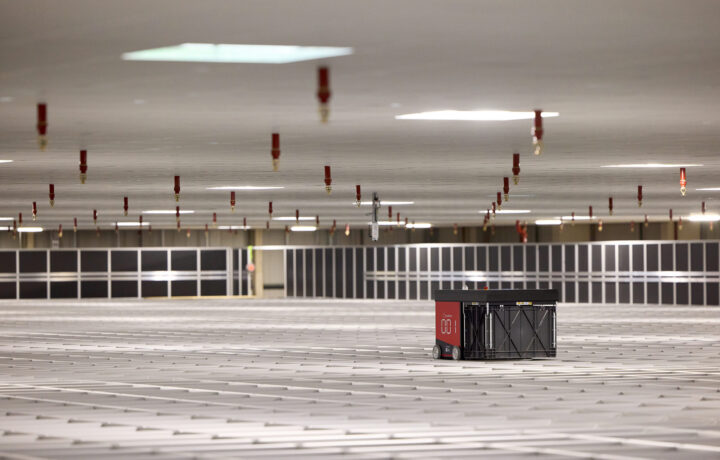
Rainbow Dynamics supplies the robotics layer. Its 4D Pallet Shuttle addresses pallet storage, RackBot retrieves totes from multilevel racking and GroundBot moves totes to workstations. By bringing inventory to people, the arrangement can reduce walking and repetitive handling while supporting a more consistent fulfilment process.
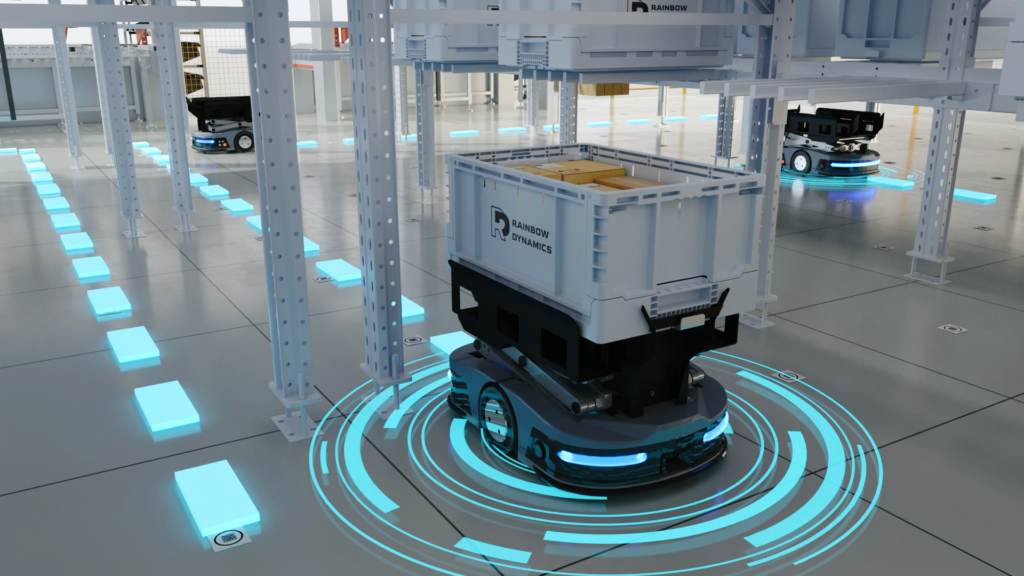
Rainbow Dynamics was established in 2023 and has deployments in Asia and the United States. Its projects include RackBot for a German technology and engineering group in Taiwan and a pallet shuttle system for a leading US online retailer. European growth is being developed under Jaap Vos, General Manager for the UK and Europe, through partnerships with systems integrators rather than a direct project-delivery model.
FarmaSort and Collo-X extend the architecture into sortation. FarmaSort’s background is in pharmaceutical applications; Collo-X applies that competence to ecommerce, fulfilment, third-party logistics and distribution. The MicroSorter can route items to bags, cartons, totes and roll containers. It may be used as a standalone unit with manual induction or integrated with other automated processes.
Efficiency and resilience through modularity
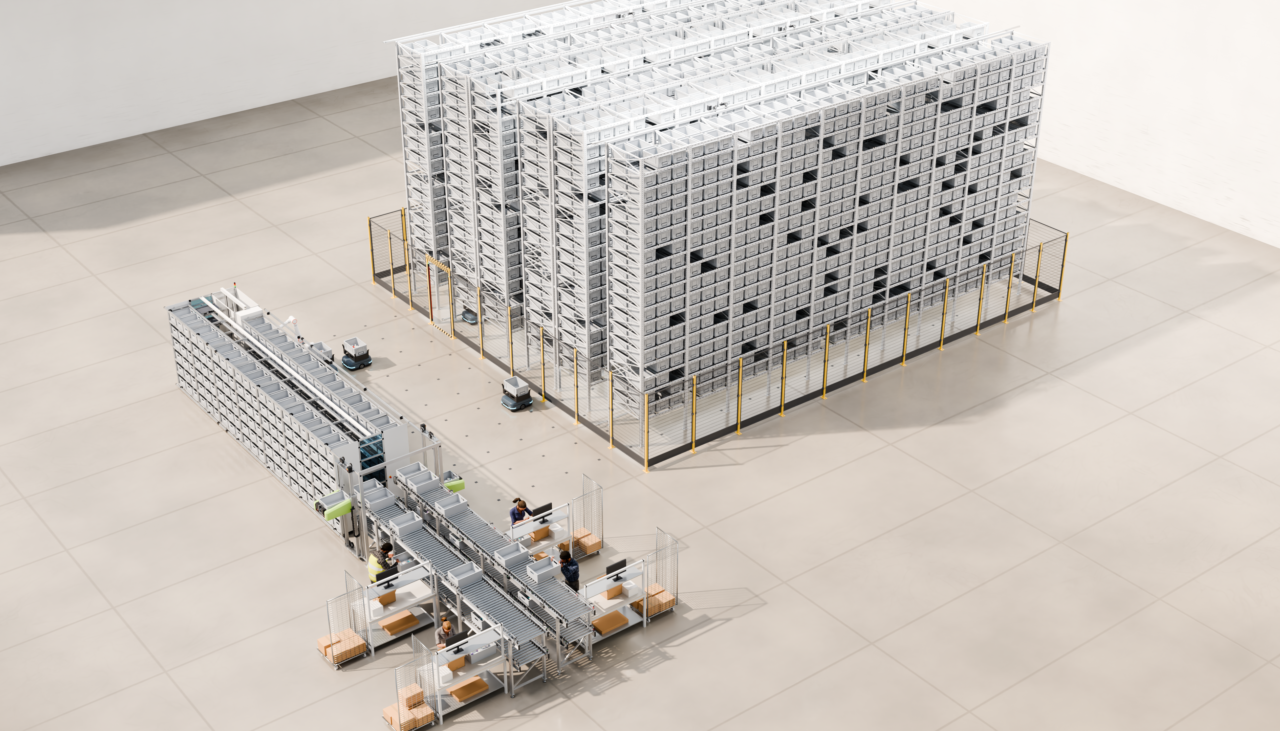
Connecting MicroSorter and RackBot creates a path from storage and picking to sorting. Extra destinations can be placed vertically, improving use of the available footprint, while additional sorter modules and robotic resources can be added later. This supports a targeted investment strategy: a business can address its most pressing bottleneck before extending automation across the operation.
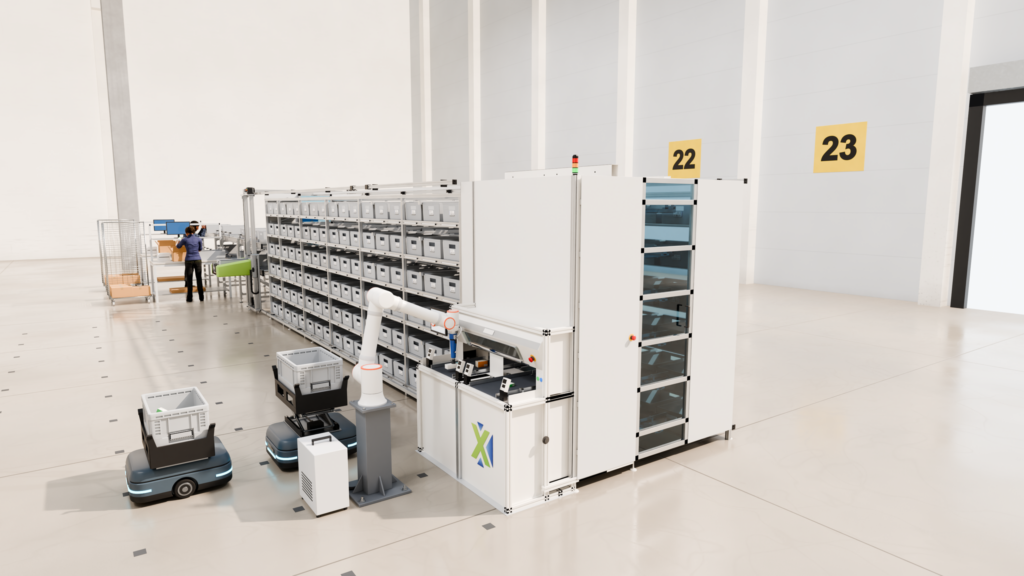
Such an approach may also improve resilience to changing demand. Online retailers can respond to seasonal or shifting order profiles, while logistics providers can introduce destinations for additional customers. Less walking and manual transport may improve working conditions, although automation still depends on effective process design and integration.
Implementation is another practical consideration. Standardised components, modular assembly, compatibility with existing facilities and support for standard shelving can help contain infrastructure changes. The delivery timetable will vary with configuration, software integration and site readiness.
The systems integrator remains responsible for understanding the operation, coordinating the deployment and providing local service. That role is important in Industry 5.0 terms: technology is not presented as an isolated machine, but as an adaptable capability built around operational requirements and the people using it.