Physical truth is the missing layer in warehouse AI
AI is often presented as a route to more autonomous warehouses, but autonomy requires more than a powerful model. It requires a dependable understanding of what is physically happening inside the building. If digital records lag behind reality, automated decisions can amplify rather than remove operational uncertainty.
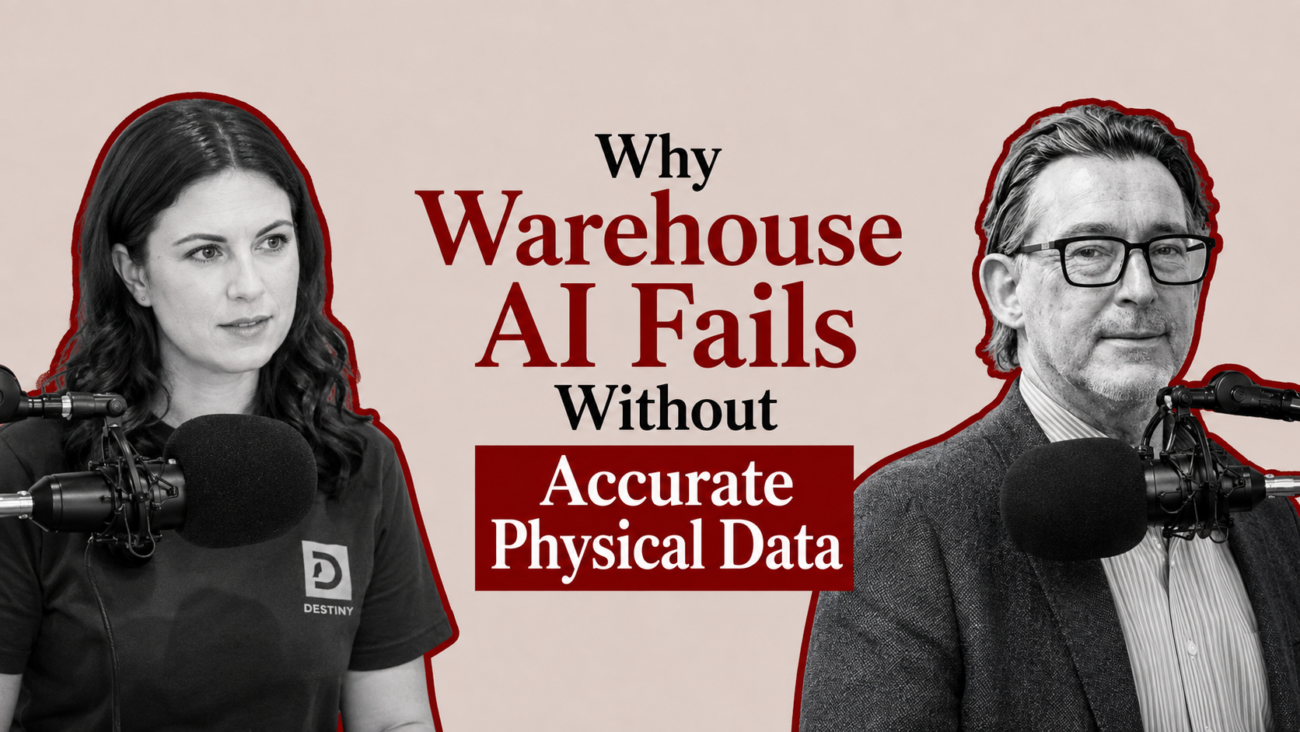
That challenge was discussed by Oana Jinga, Chief Commercial and Product Officer at Dexory, in a conversation with Peter MacLeod. The central concern is the difference between what a Warehouse Management System reports and what workers, equipment and inventory actually encounter. A location marked as correct in software may not reflect the current position of stock or the usable capacity of a rack or aisle.
From digital inventory to Physical AI
Warehouse intelligence must therefore extend beyond cycle counts. To make useful recommendations, AI needs a description of the environment: rack configurations, occupied and available space, movement, machinery, and the physical characteristics of goods. This richer dataset connects the digital operating layer with the material world and supports the development of Physical AI.
The implications are practical. Inaccurate records lead to searching, investigations and avoidable travel. They can reduce picking efficiency, produce incomplete orders and interrupt the flow of materials to manufacturing. Continuous attention to accuracy can consequently improve several measures at once, including productivity, service performance and profitability.
Automation with resilience, not automation for its own sake
More connected systems and robotics may allow warehouses to respond faster and handle more complex decisions. AI could also reproduce some of the pattern recognition associated with experienced managers. Yet human understanding remains essential when data is incomplete or conditions change unexpectedly. Resilient operations will combine algorithmic analysis with practical judgement rather than treating one as a replacement for the other.
The implementation principle is simple: establish the operational problem first, test the reliability of existing information and then choose a solution. For Industry 5.0 strategies, accurate physical data is not merely an IT improvement. It is an enabler of trustworthy automation and more informed use of human expertise.