Rooftop solar gives logistics site a more resilient energy model
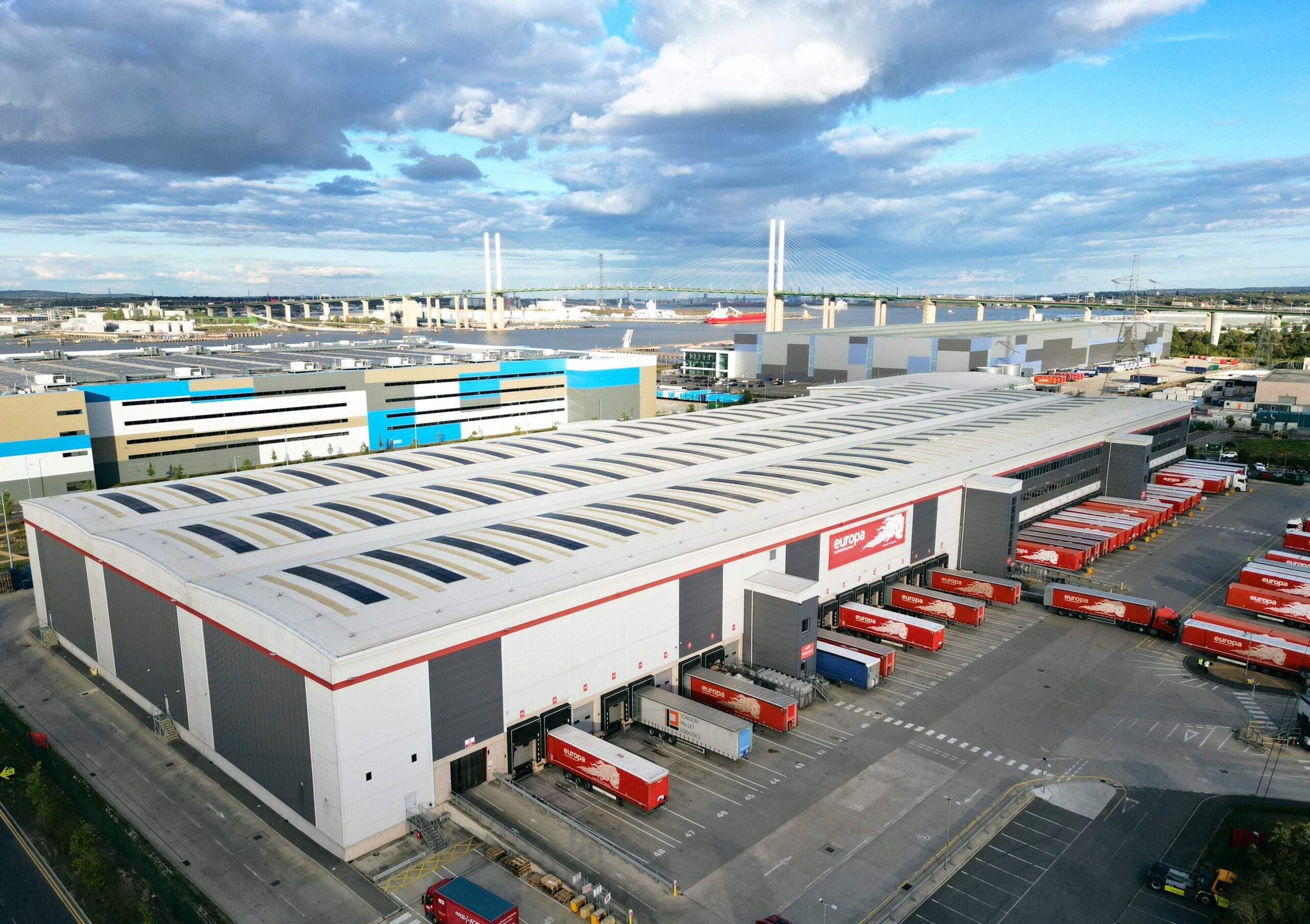
Industrial decarbonisation does not always require new land or a separate generation site. Europa Worldwide Group’s latest project at Dartford shows how an existing logistics building can become part of an organisation’s energy infrastructure.
The company has installed a 600 kWp rooftop photovoltaic system at its £30 million facility with Prologis, the site’s landlord. Annual generation is expected to reach 541,800 kWh. At current electricity rates, Europa estimates first-year savings of approximately £80,000, while initial operating data showed solar supplying more than 40% of monthly site consumption.
Integrating generation with industrial operations
Dartford is Europa’s European road freight hub and also accommodates specialist 3PL services. Its 26,368-square-metre footprint creates material daytime demand, allowing locally generated electricity to support warehouse and logistics activity while it is being produced.
The project is significant not only because of the panels, but because of the delivery model. A warehouse occupier may control the operation without owning the building, so technical, contractual and financial decisions can involve a broad group of parties. Grid connection times, structural assessment, insurance and lease terms have all been identified as recurring barriers to wider adoption.
Prologis addressed the financing and coordination challenge through a 30-year Power Purchase Agreement. Under the arrangement, Europa purchases renewable electricity generated at the site rather than funding the installation upfront. Through Prologis Essentials, Prologis’ energy specialists handled the energy assessment, system sizing, approvals, procurement, installation and commissioning. The agreement also removes potential dilapidation or exit charges if Europa leaves before the solar term concludes.
From isolated project to scalable industrial practice
The UK Warehousing Association estimates that existing warehouse roofs could offer 17.3 GW of solar capacity. Yet research across more than 300 roofs found systems on only 5%, suggesting that the main constraint is not simply physical space. Commercial alignment and implementation capacity matter just as much.
This is Europa’s first rooftop solar installation and Prologis’ 48th in the UK. The system is designed to provide local renewable electricity for 30 years, supporting emissions reduction and energy resilience. For Industry 5.0 thinking, the practical lesson is clear: sustainability infrastructure works best when it is connected to real operating demand and delivered through a model that removes unnecessary complexity for the industrial user.