The Industry 5.0 Case for Humanoids Starts With Ownership Data

Humanoid robots are entering warehouse strategy discussions as companies respond to labour pressure and pursue more adaptable forms of automation. Their potential lies in moving between tasks designed for people, but that flexibility should not be confused with immediate autonomy or guaranteed efficiency.
A five-year view changes the investment conversation. Independent modelling from RobixOne suggests that mid-tier consumer and light-commercial humanoids can cost around 1.6 times their list price over five years. Service contracts, extended protection, spare batteries, post-warranty actuator repairs, insurance and electricity all contribute to the total.

Resilience depends on support as well as hardware
For a modern distribution centre, maintainability is part of operational resilience. A joint failure may combine a repair bill with lost picks and extra human supervision. Buyers should therefore require written information on multi-year support, renewal terms and critical replacement parts before scaling beyond a pilot.
Current deployments are better understood as supervised human-machine systems. They need mapped environments, carefully scoped tasks, charging routines and defined recovery processes. This creates a role for warehouse employees in monitoring, exception handling and keeping the robotic cell productive. It also means that the transition is not simply a matter of removing labour from the process.
Flexibility must be matched to the right task
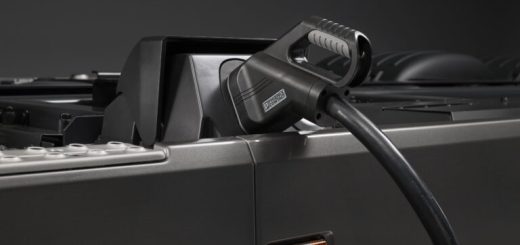
The most credible early applications involve repeatable work in stable layouts. A complete sustainability and productivity assessment should include docking infrastructure, reserve power, software support, authorised technicians and the time required to manage failures or changeovers.
Specialised AMRs, cobots and human teams may remain the better choice for a single high-volume motion. A humanoid becomes more compelling when a business values one adaptable platform across several jobs, particularly where installing separate automation for every task would be costly or inflexible.
Before approving capital expenditure, companies should test three assumptions: the full five-year cost after launch incentives expire, the out-of-warranty price of critical joints or hands, and measured cycle performance using their own SKUs. Evidence-based pilots can build capability without locking the operation into an immature fleet.