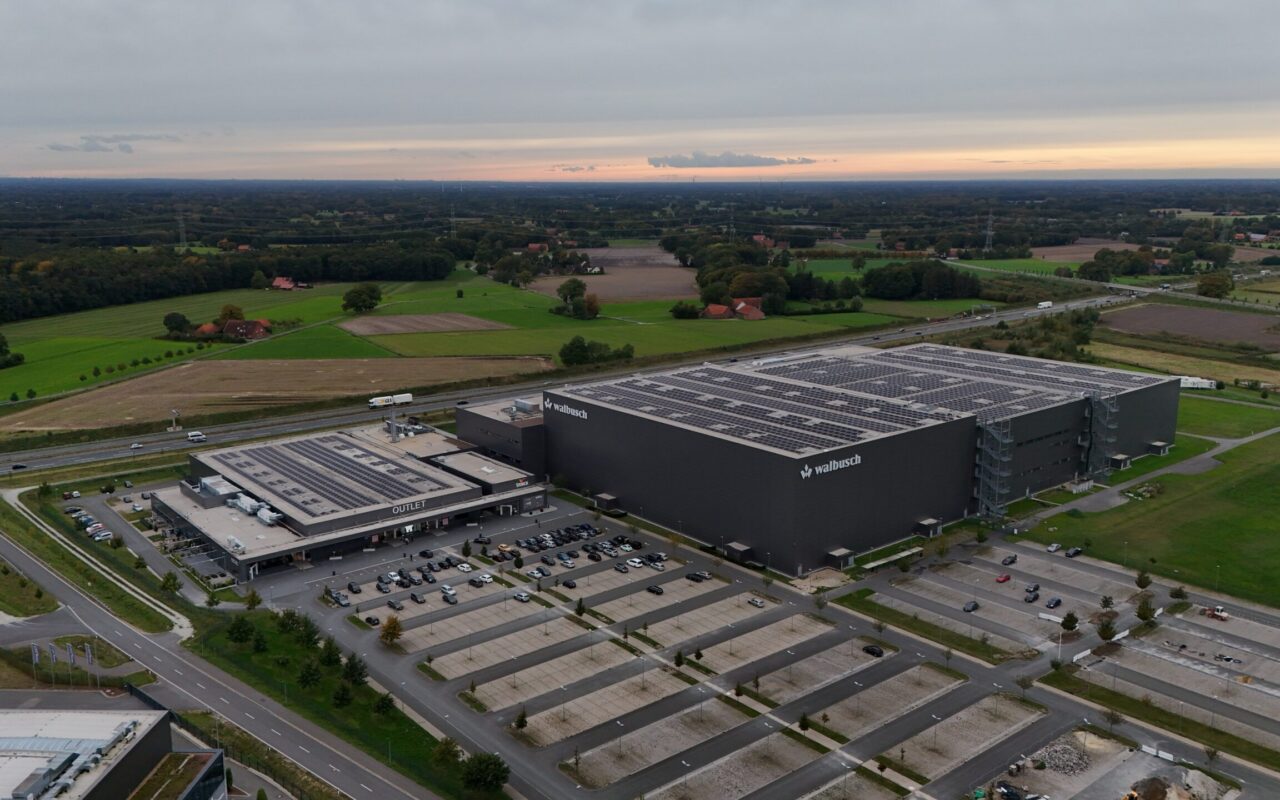
Walbusch is using a phased warehouse-modernisation programme to bring wholesale distribution and direct-to-consumer fulfilment under one digital operating model. The German apparel group has expanded its Infios Warehouse Management deployment at the Ravenna Park logistics site in Halle, Westphalia.
The approach is relevant to companies balancing established infrastructure with rapidly changing order profiles. Ravenna Park was originally geared towards high-volume B2B operations. As online demand increased, the site needed to process more fragmented orders alongside store replenishment, hanging garments and flat-packed goods. Walbusch and Infios have developed the existing landscape since 2021, allowing the operation to evolve while continuing to serve customers.
Digital coordination across automated flows
Infios WM provides common process rules for multiple brands and fulfilment models without removing operational separation between clients. It also acts as a central coordination layer for triple-deep shuttle storage, conveyor systems, EcoPocket picking, a matrix sorter and a horizontal tilting-tray sorter.
That architecture supports a more resilient response to changing volumes because different order types can be managed within the same control environment. RFID-based identification and localisation of individual items add a further layer of traceability, with reported inventory accuracy of 99.99%. On-time shipment performance is stated at 97%.
Capacity without a wholesale replacement
The expanded system is designed for up to 25,000 shipments per day and annual throughput of 6.5 million parcels. Its automation foundation can support material movements across up to 250,000 storage locations. High-load operation began in mid-2026.
For Industry 5.0 programmes, the case also highlights a practical principle: digital resilience can come from continuous adaptation, not only from greenfield construction. By building on an existing technology investment, Walbusch has created a scalable base for omnichannel growth while retaining flexibility in day-to-day fulfilment. Further details are available in the Walbusch case study.