Warehouse AI is moving from digital insight to physical execution
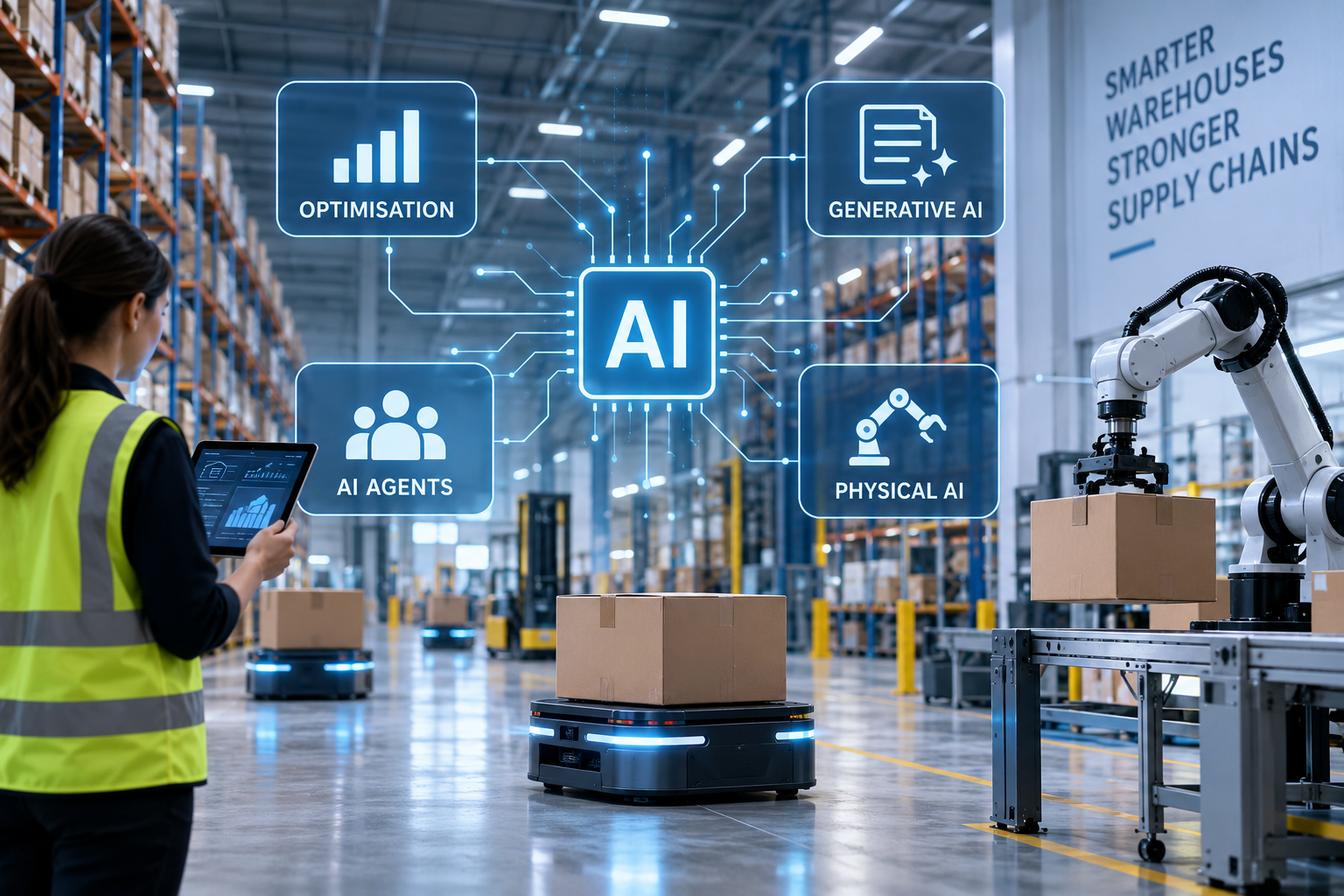
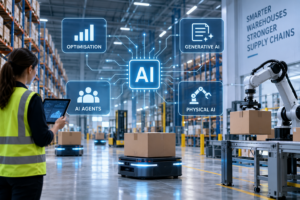
Warehouse automation is entering a more integrated phase. Artificial intelligence is no longer limited to forecasting or analytical dashboards; it is beginning to influence decisions and physical activity on the warehouse floor. Gartner identifies four related trends, shaped by labour constraints, changing investment models and the greater maturity of AI-enabled autonomy.
A stronger digital operating layer
Traditional AI optimisation is becoming more dynamic. Demand forecasts, labour plans, route decisions and inventory controls can draw on richer real-time data and adjust to changing conditions. This can improve resource utilisation and resilience without abandoning the repeatability and visibility required for industrial operations.
Generative AI adds a second capability. Instead of operating as a standalone conversational interface, it can be embedded in workflows and turn mixed-quality operational information into procedures, work instructions, exception-handling guidance and decision support. For industrial companies, this creates a route to make process knowledge more accessible while responding faster to deviations.
Human-centred autonomy and physical systems
Suggestive and semi-autonomous agents provide a controlled transition between manual coordination and fully autonomous operation. They can interpret warehouse data, recommend multistep workflows and execute limited actions. Applications include assigning tasks, managing exceptions and allocating resources, with people retaining responsibility for supervision.
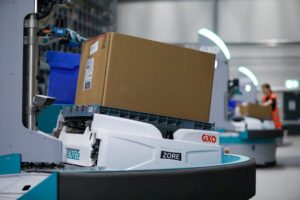
The fourth trend is physical AI, where algorithms work with robotics and advanced sensing. Picking, packing, sorting and material handling can be supported by agents that act in the physical environment. Potential benefits include more consistent throughput, improved workplace safety and reduced exposure to persistent labour shortages.
This progression also has implications for resilience. Systems that can update plans, guide staff and coordinate machines may help warehouses absorb operational variation more effectively. However, greater autonomy does not remove the need for governance: data quality, escalation routes, performance measurement and human intervention must be designed into deployment.
Gartner’s practical advice is to begin with mature applications such as labour forecasting and slotting. Companies can then evaluate whether generative AI and agent-based automation deliver measurable value before expanding their role. A staged approach supports digital transformation while limiting operational risk.