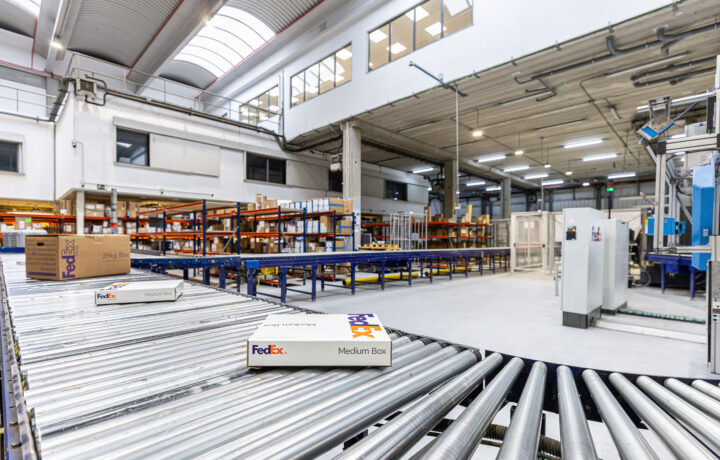
Industry 5.0 discussions often focus on robotics, artificial intelligence and connected control systems. Yet one of the most practical ways to improve an automated warehouse may involve a less visible element: the conveyor belt. Forbo Movement Systems says low-friction belts can reduce conveyor energy demand by up to 50% compared with conventional belting.
The opportunity reflects an important principle of industrial innovation: system performance depends on the interaction of many small components. In a large distribution centre, hundreds of conveyors may operate across kilometres of infrastructure. Reducing resistance at the belt can therefore deliver a cumulative effect, lowering the power required by drives and potentially reducing stress on motors, bearings and related equipment.
A mechanical upgrade with digital consequences
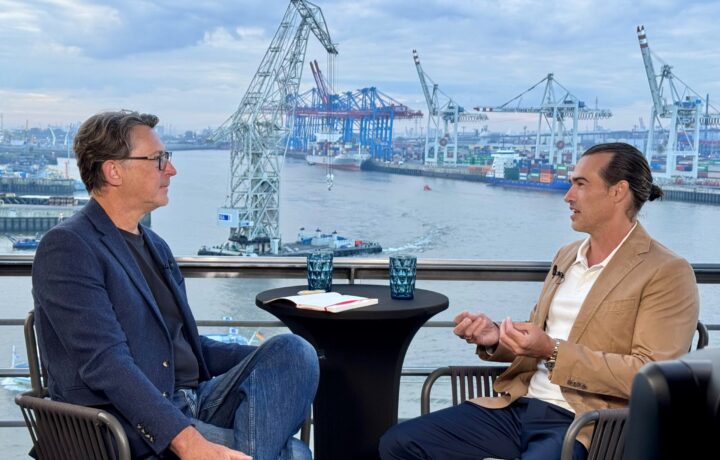
Sascha Goly, Global Segment Manager for Logistics and Sortation at Forbo Movement Systems, discusses the technology in Logistics Business Conversations. The immediate benefit is lower energy consumption, which supports both operating-cost control and emissions reduction. A secondary benefit may be longer component life, helping operators avoid unnecessary replacement and maintenance activity.
That combination fits the broader Industry 5.0 emphasis on resilient, resource-efficient production. Energy efficiency is not treated as a separate sustainability project; it becomes part of how the asset is designed, operated and maintained. A belt that reduces drive requirements can contribute to that objective without requiring a complete redesign of the conveyor network.
Connecting uptime with predictive maintenance
The implications are especially relevant in airport baggage handling and e-commerce distribution. These environments depend on high throughput and reliable material flow, so an interruption in one section can affect connected processes. Belt performance is consequently linked to operational continuity as well as energy consumption.
The discussion also points to smart conveyor technology and predictive maintenance. Condition monitoring could help operators recognise early signs of failure before they develop into costly downtime. Combined with lower-friction hardware, this creates a layered improvement strategy: reduce energy demand, protect critical components and use operational data to plan intervention.
For industrial companies, the practical lesson is that digital transformation does not always begin with a new software platform. It can start with a better mechanical interface, then extend through monitoring and analytics. In that sense, conveyor belting becomes part of a wider architecture for efficient and resilient automation.