Warehouse capacity is becoming a technology question as much as a property question. Operators must process smaller and more varied orders, meet faster delivery expectations and manage returns, while labour shortages and wage inflation limit the value of simply adding people. Artificial intelligence, robotics and high-density storage are offering an alternative route to growth.
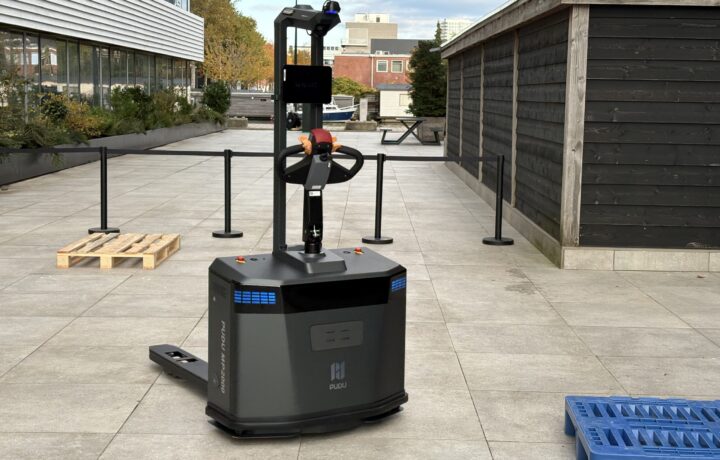
The global warehouse automation market is expected to rise from around €21 billion in 2025 to €42 billion in 2030. The significance of that expansion lies not only in the number of machines installed, but in how automation is changing the operating model. Robots are moving beyond transport into product manipulation, while software links equipment and makes decisions across the workflow.
Automation becomes more adaptable
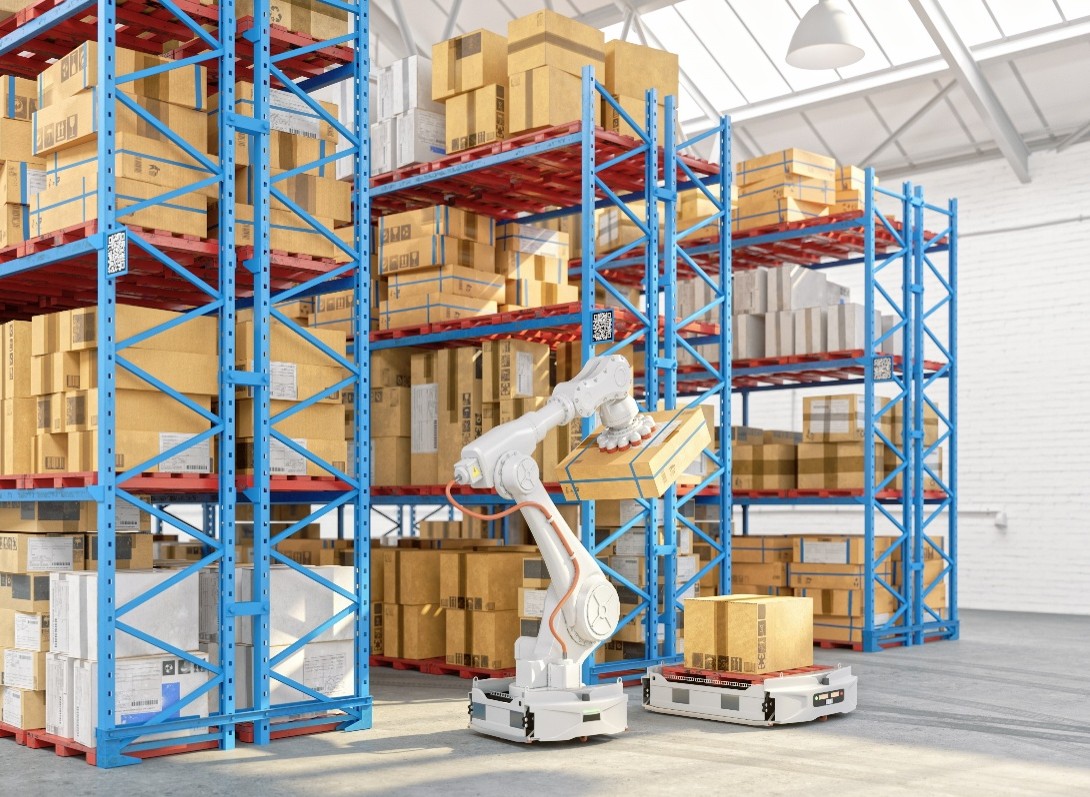
Machine vision, improved grippers and AI are widening robotic use in picking, stowing, depalletising and packing. Humanoid robots are still at an early stage, with warehouse activity so far focused on cases and transfers between equipment. Nevertheless, the structured nature of warehouse work provides a practical setting for development.
AI can respond to variable order profiles by deciding where inventory should be positioned, how goods should travel and which robot should execute a task. In goods-to-person systems, it can also sequence retrievals so workers receive the required products with less waiting. This can increase flexibility without matching every rise in volume or product variety with proportional labour growth.
Retrofitting for resilience
Modular systems allow companies to expand capacity by process or zone rather than replacing an entire facility. High-density matrix systems, also called cubic AS/RS, can be configured for a range of dimensions and capacities. Their goods-to-person design is suited to operations with many SKUs and lower loads, and they can be integrated with existing automation. Adoption is estimated to grow by 20–25% over the next five years.
This approach matters as warehouse stock growth across Europe, the US and Asia-Pacific is expected to slow from roughly 5% annually in 2020–25 to 3–4% towards 2030. Better use of existing space can reduce dependence on continual physical expansion, although the benefits depend on fitting new technology around established infrastructure.
Digital coordination is the foundation
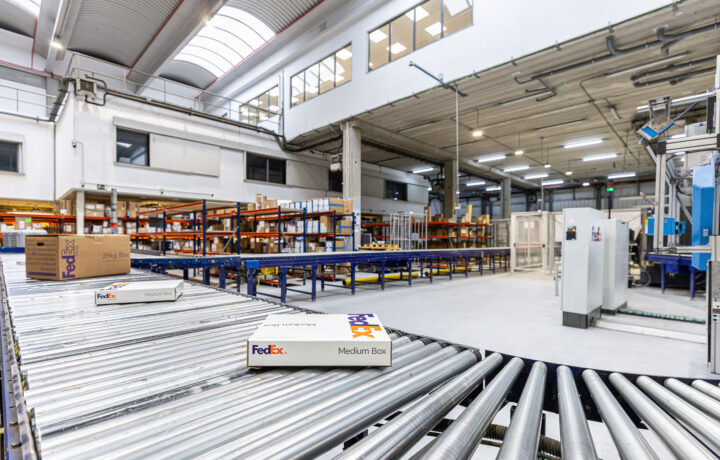
Resilient automation requires more than isolated equipment. Platform-agnostic software and system integrators are connecting robots, storage, sorters, conveyors, warehouse management and control systems. Orchestration platforms allocate tasks, coordinate fleets and manage material flows in real time.
For Industry 5.0, this connectivity is important because it combines productivity with adaptability. Companies should assess whether an investment improves the complete flow, not just the performance of one machine. The strategic objective is a warehouse that can absorb changing demand, use space efficiently and evolve without repeated full-scale replacement. Background analysis is available from L.E.K Consulting.