A warehouse can have sufficient handheld scanners on its inventory list and still fail to equip a shift efficiently. The hidden cause is often behavioural: employees place dependable devices in personal lockers so they can rely on them the following day.
From an Industry 5.0 perspective, this is a useful signal. Workers are adapting to an unreliable process in order to keep production moving. Punitive checks may recover some equipment, but they do not remove the uncertainty that caused people to retain it. The stronger response is to redesign the interaction between employees, assets and the digital workflow.

Making the hidden fleet visible
Traditional asset systems frequently reduce status to two options: in circulation or lost. A scanner kept in a locker is neither. This weakens inventory accuracy, obscures the true size of the usable fleet and can lead to replacement spending. One retailer had budgeted a six-figure annual amount for missing handhelds, but no longer needed those replacements after changing its issue-and-return process.
The same lesson applies beyond expensive electronics. IKEA found that unavailable tape measures and safety knives at packing benches could prevent work from starting. The operational impact came from the delay, not the price of the tools.
Digital infrastructure with a human outcome
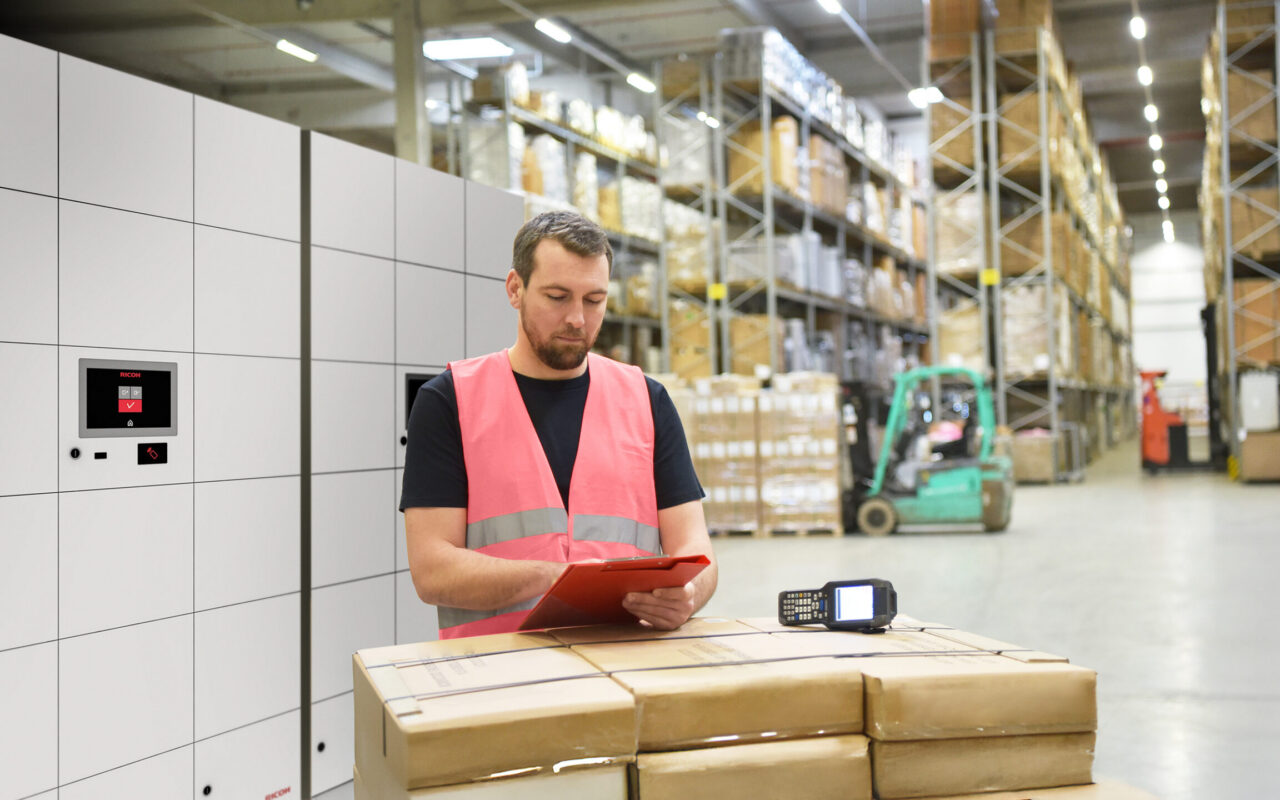
Smart lockers can support a fairer and more resilient allocation model by issuing the least-used scanner first. This spreads wear, prevents a small number of devices becoming permanent favourites and helps newer equipment enter normal use. Return workflows can also let employees record faults themselves. That creates faster feedback for maintenance and protects the next user from unknowingly collecting defective equipment.
Distributed access is equally important. Next has placed lockers across its distribution centre, reducing the distance employees travel to collect or return devices. Better ergonomics and shorter journeys make compliance easier while removing the practical argument for taking equipment away.
The technology should therefore be assessed as a system rather than as a cabinet purchase. Allocation rules, feedback loops and asset data determine whether the investment supports operational resilience. Ricoh UK’s smart locker services provide one example of the available model.