ADM turns electric HGV pilot into scalable logistics model
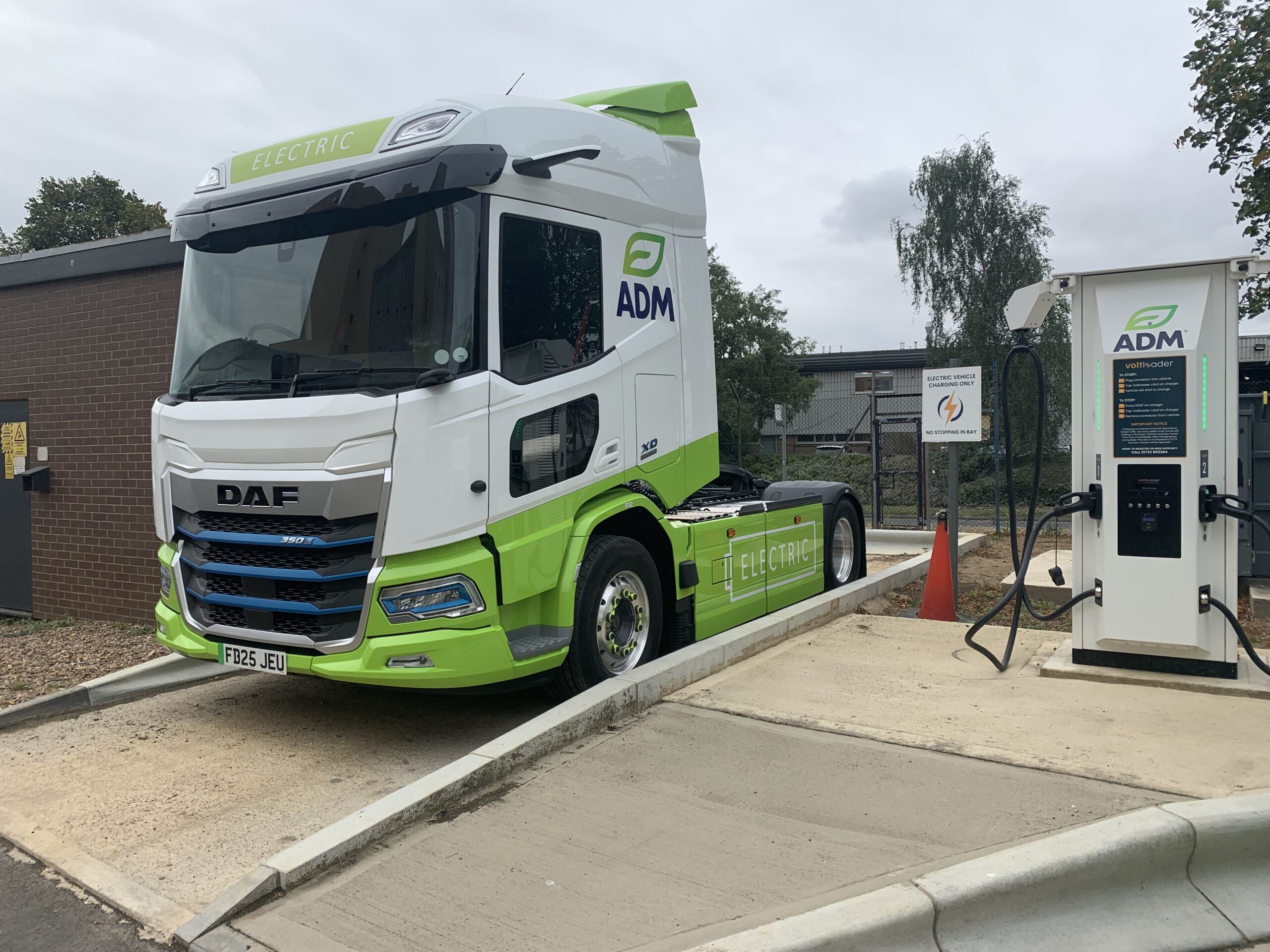
ADM has moved beyond a single-vehicle electric truck trial and built a five-vehicle network spanning three UK sites. The programme links transport decarbonisation with the practical systems needed to keep an industrial supply chain running.
The first electric HGV was introduced at Corby with Voltloader. A mobile charger supported the initial phase, giving the partners a controlled way to assess vehicle performance before installing permanent equipment.
Infrastructure and operating logic
The next step was an ultra-rapid charger at Corby. It was configured for double-shift operations, helping ADM reduce downtime and make better use of the vehicle. The equipment is also open to third-party commercial vehicle operators, creating additional utility from the site asset.
This sequence is significant for industrial companies considering similar projects. Vehicle acquisition alone does not create an electric fleet. Charging availability must be matched with routes, duty cycles, shift handovers and the timing of loading and unloading. ADM had to fit those variables into a milling operation that moves approximately 800,000 tonnes of wheat annually across the UK.
Resilience alongside decarbonisation
ADM estimates annual transport-related CO2 savings of about 375 tonnes against its previous diesel fleet configuration. The company reports that customer deliveries and day-to-day operations continued without interruption, suggesting that the deployment was designed around continuity rather than treated as a separate demonstration.
The electric trucks have also changed the driver environment, with less noise and vibration reported. Ashley Fuller of ADM Milling said the original question was whether an electric HGV could perform effectively in the fleet. The outcome provided enough operational confidence to extend the programme to Knottingley and Avonmouth.
Dave Rose, chief executive of Voltloader, described the project as a combined model covering electric haulage, charging services and site infrastructure. That systems perspective is central to scaling: the technology must be embedded in workflows rather than added beside them.
Where the model could go next
ADM and Voltloader are considering applications in inbound agricultural transport and downstream food distribution. The next stage will test whether the operating framework can support more complex transport flows while preserving service levels.
For manufacturers and food processors, the project offers a practical example of phased innovation: start with a measurable operational test, build the infrastructure around real utilisation, then replicate the model across sites.