AI Brings Logistics Closer to a More Resilient Operating Model
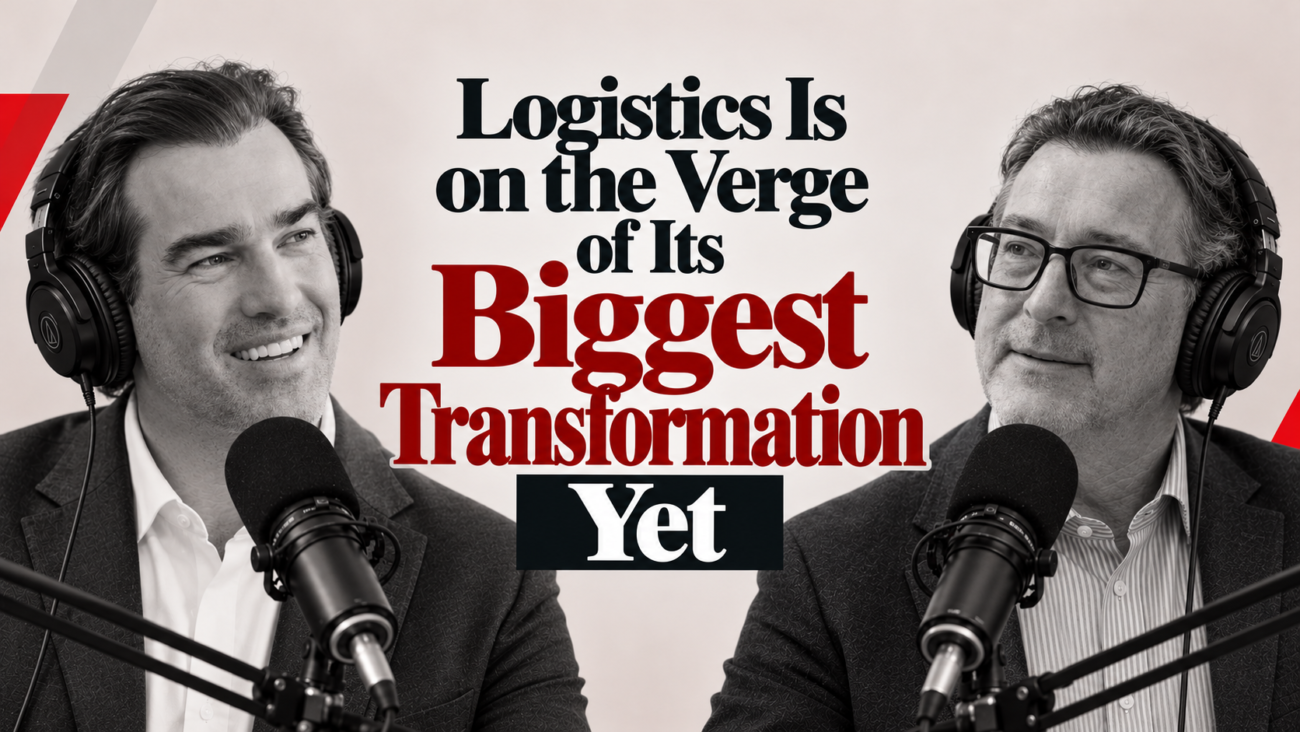
Artificial intelligence is beginning to change logistics at the level of daily operations, not just long-term planning. Jett McCandless, founder and CEO of project44 and its AI-focused spin-off LSP44, believes the sector may be approaching a transition comparable with the emergence of containerisation.
The discussion, recorded at the Port of Hamburg, highlighted AI agents capable of communicating with transport operators and resolving inconsistencies in shipment information. They can also help identify potential cargo theft before it becomes a major loss. Such applications could make supply chains more responsive by reducing the delay between an event and the action taken in response.
Efficiency, resilience and working capital
Better visibility has consequences beyond tracking. One company cited by McCandless reduced its inventory by approximately $150 million after improving supply chain visibility. For industrial organisations, that suggests a direct link between data quality, working capital and resilience: the more confidently a business understands what is happening in transit, the less it needs to rely on broad safety buffers.
AI could also strengthen exception management. Automated systems may detect anomalies, request missing information and escalate issues earlier, allowing human teams to concentrate on decisions that require judgement. Faster responses can support continuity when transport conditions become uncertain.
Responsible automation will be essential
The benefits are not automatic. Companies must protect commercially sensitive data shared with external platforms and define clear limits for autonomous action. Human oversight will remain important where decisions affect security, customers or critical supply commitments.
The workforce will need to adapt as well. While AI may reduce repetitive communication and administration, it is likely to increase demand for data literacy, process supervision and problem-solving. McCandless expects significant acceleration in logistics technology over the next five years. Industrial companies that combine automation with strong governance and workforce preparation will be better placed to build efficient, resilient supply chains.