Purpose-led automation can strengthen resilient logistics
Automation can improve logistics performance, but adding technology is not automatically the same as improving a system. Intralox is urging industrial operators to begin with a process diagnosis: what constraint is limiting performance, and what result should an investment deliver?
Antonio DiCarlo of Intralox, drawing on three decades in the sector, describes automation as one tool among several. Its value should be demonstrated through measurable gains in productivity, ergonomics, maintenance and total cost of ownership. This outcome-based approach is particularly relevant to companies balancing capacity requirements with capital discipline and operational resilience.
Whole-process thinking
Manual parcel sorting shows why isolated automation decisions can fail. Employees may sort items while also managing the flow of parcels, straightening packages and resolving other operational issues. Automating the sorting motion without reviewing these connected activities may simply create a new bottleneck.
A system designed around the complete workflow is also more likely to be usable and maintainable. DiCarlo compares the choice with buying a car: headline performance matters less than reliability, comfort and suitability for everyday operation. For industrial users, a less spectacular solution may deliver stronger long-term results if it is easier to run and service.
Upgrading what already exists
E-commerce has changed parcel volumes and operating patterns, prompting many businesses to seek more output from current sites rather than immediately invest in new buildings. Targeted automation can support this strategy by extending existing equipment while limiting unnecessary complexity.
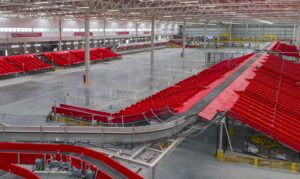
Intralox is developing technology intended to automate the induction of bulk parcels into existing loop sorters. Field pilots are expected around late 2026 or early 2027. The work illustrates a pragmatic route to digital and mechanical modernisation: address a defined interface or constraint while preserving useful infrastructure.
For Industry 5.0 thinking, the implication is clear. Resilient automation should support people, simplify daily operation and create measurable value. The best project may not be the one with the most machinery, but the one that improves the complete system with the least avoidable complexity.