Ecobundle links reusable packaging with leaner logistics
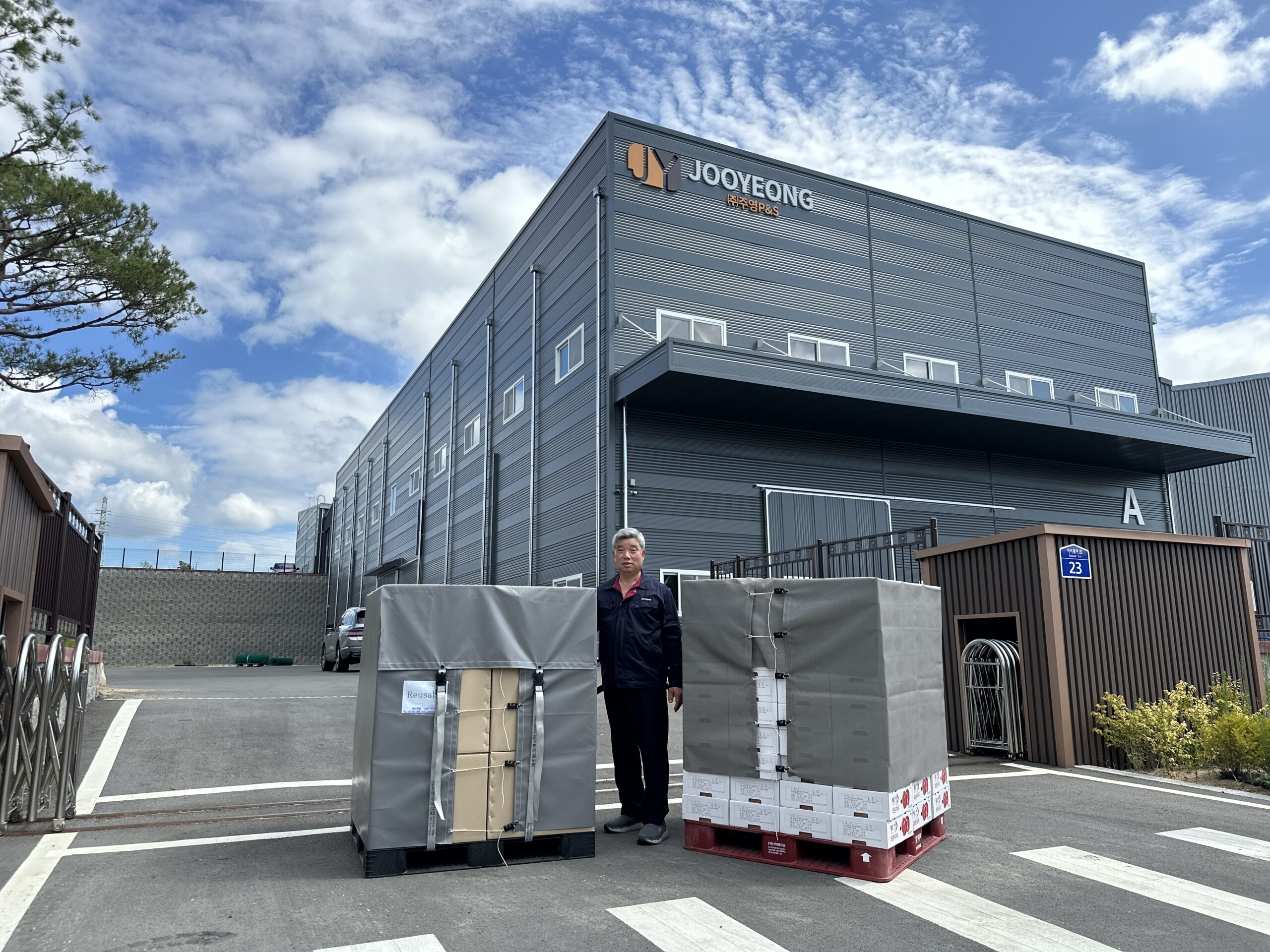
Reusable packaging is moving closer to the centre of industrial efficiency strategies as logistics operators face both material costs and tighter circularity expectations. Ecobundle, developed by South Korean manufacturer Jooyeong P&S Corporation and distributed internationally by Chempeople, offers a reusable alternative to pallet stretch film.
The system combines a high-tenacity PVC-coated polyester cover with securing belts. It is intended for standard pallets from 950 to 1,100mm, with approximately 20% flexibility for changing cargo volumes. Applying it takes one to two minutes and requires no wrapping machine or specialist training. This makes the solution a process-level intervention rather than a major automation project: operators can change the consumable while retaining existing manual workflows.
A resilience and cost argument
Jooyeong P&S reports payback after around 35 uses. At 20 pallet cycles each month, the purchase cost would be recovered in approximately 1.7 months. Across 600 uses, the company calculates a 93% net cost saving compared with single-use stretch wrap, even after allowing for 20% losses and damage.
The design also addresses operational resilience. More than 1,000 reuses are expected from each unit, while modular construction allows worn components to be replaced individually. Available formats include Standard Tarpaulin for general logistics, Fixed/Pallet-Anchored for more secure long-distance transport, and Mesh for fresh produce, frozen products and cargo requiring airflow. Branding, colour selection and identification-label holders can be specified.
Measured deployment and regulatory pressure
Ilyang Logis deployed Ecobundle at its Okcheon Distribution Centre in 2023. First-year costs fell by 30%, while packaging waste declined 97% during a two-year pilot. The company also reports that staff moved from initial resistance to a preference for the reusable system, describing it as faster and easier to use than stretch film.
The environmental figures supplied for the product indicate a 95% reduction in CO₂ emissions over 365 uses and the avoidance of 650g of plastic waste per pallet cycle. A polypropylene version, offered in transparent and coloured options, is intended to meet relevant PPWR material requirements from August 2026. The system is being positioned against the EU requirement for 40% reusable transport packaging by 2030, giving manufacturers and distributors a relatively low-disruption route toward that target.