The human infrastructure behind resilient warehouse automation

Automation is often presented as a route to greater efficiency and resilience, but every automated warehouse still depends on a physical technical infrastructure. Batteries, drives, sensors, control systems and communications all require people who can install, diagnose and repair them. As logistics equipment becomes more autonomous, the skills challenge is becoming more complex rather than disappearing.
Growth in apprenticeships is uneven
England recorded 353,500 apprenticeship starts in 2024/25, a 4.1% annual increase, while participation reached 761,480. Higher-level training is expanding rapidly: starts at Level 4 and above grew by 15.1%, and degree apprenticeships accounted for 17.1% of all starts.
Yet industrial automation also needs strong entry routes into hands-on technical work. Engineering and technology produced more than 100,000 starts, up 5% year on year, but engineering-related starts were still 9% below their 2014/15 level. Level 2 engineering starts have more than halved since 2017/18. The IET says 76% of engineering employers struggle to recruit people with key skills.
Skills are part of automation resilience
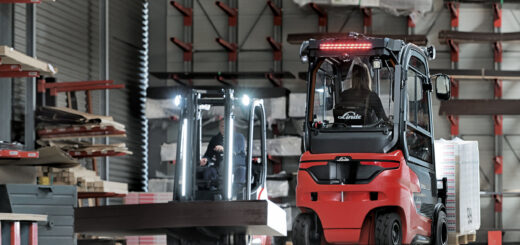
This matters directly to logistics operators. A modern forklift technician may work with high-voltage or battery systems, electronic controls, sensor data, diagnostic software and autonomous functions. Maintenance teams supporting robotic storage and shuttle systems face a similar mix of mechanical and digital tasks.
Germany’s dual vocational model offers one route to building that capability. Although 461,900 people entered dual training in 2025, down 2.8% from the previous year, more than 1.2 million people were still participating at year-end.
STILL has adopted a long-term approach. The intralogistics manufacturer welcomed 58 apprentices and dual-study students and offered jobs to all 34 people in its previous Hamburg cohort; every offer was accepted. It now has 241 young people in training across eight German sites.
For Industry 5.0 strategies, this is a useful reminder that technology and people must be developed together. Training supports not only recruitment, but also repairability, operational continuity and the sustainable use of capital-intensive automation.