Tennant positions T1660 as a practical step in industrial cleaning
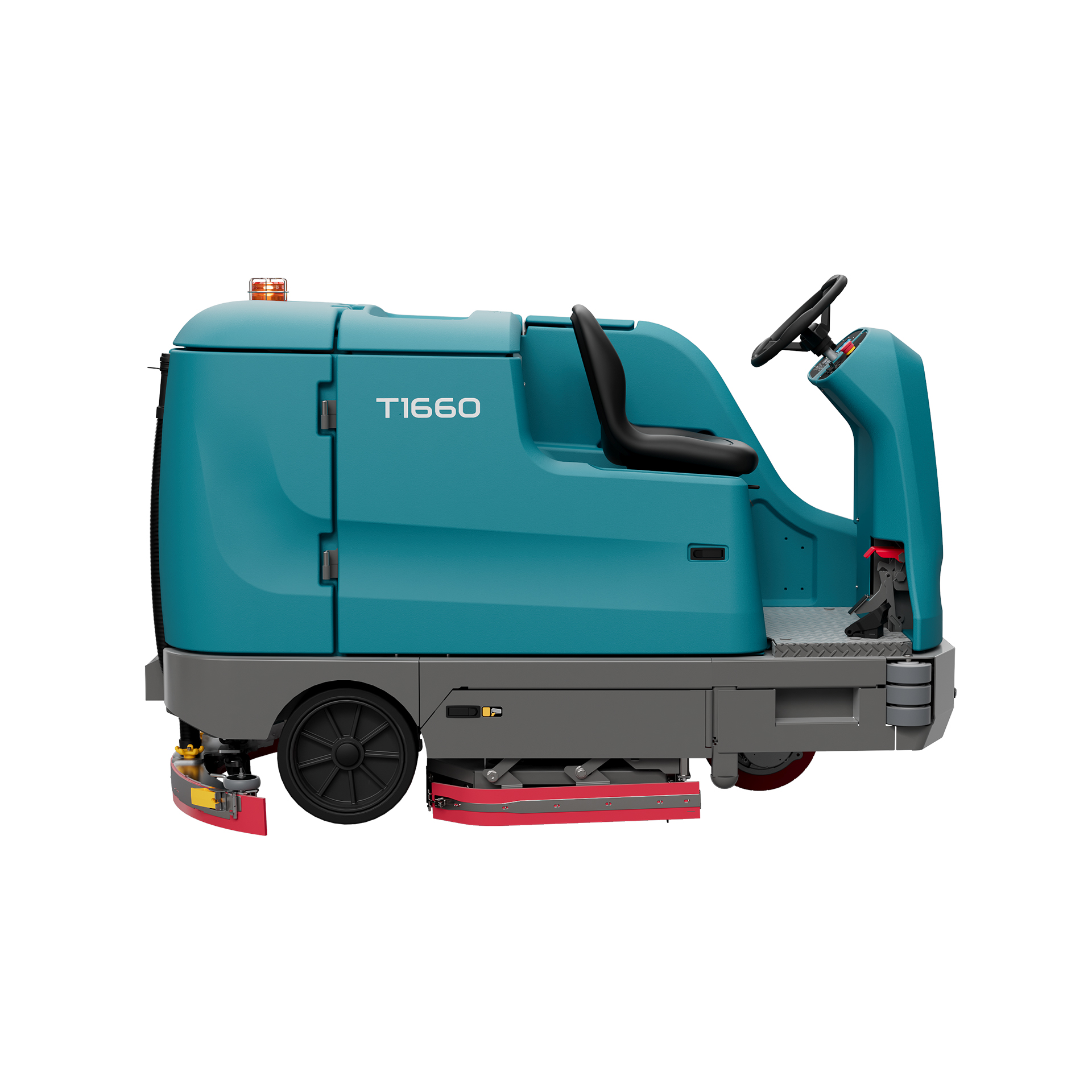
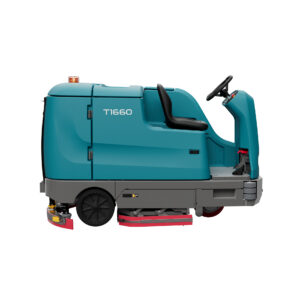
Industrial digitalisation does not always arrive as an autonomous vehicle or a connected production system. In many facilities, operational gains still come from making routine equipment easier to deploy, maintain and use consistently. Tennant’s T1660 Ride-On Scrubber, now launched across Europe, the Middle East and Africa, follows that practical model for floor cleaning.
The battery-powered machine is aimed at warehouses, manufacturing facilities, logistics centres and light industrial sites. Its proposition is straightforward: cover more floor area with fewer interruptions while keeping operator interaction uncomplicated. Large solution and recovery tanks reduce the frequency of refill and emptying stops, and intuitive controls are intended to limit training requirements.
Configurable productivity
The T1660 can deliver a cleaning path of up to 1,320 mm when equipped with a cylindrical scrub head and dual side sweep brushes. Tennant estimates productivity of up to 8,400 m² per hour. These figures describe the machine’s maximum stated capability rather than a guaranteed site result; traffic, layout, floor condition and operating practice will influence throughput.
Adjustable scrub-head down pressure allows the cleaning action to be adapted to different floor applications. Water recovery is supported by dual vacuum fans and a parabolic squeegee, helping reduce residual moisture and supporting a quicker return to normal indoor activity.
Resilience through simpler ownership
For industrial operators, resilience also depends on whether equipment can be kept available. Yellow maintenance touchpoints, instructional labels and an accessible recovery tank are intended to make routine care more visible and less time-consuming. Disk and cylindrical scrub heads are available, while optional detergent metering, an overhead guard, side sweep brushes and squeegee protection kits allow the machine to be matched to the site.
Safety features include clear sightlines, headlights, blue safety lights and a seat switch that disables propulsion when the operator is not seated. The ergonomic station supports longer periods of use, while battery operation reduces noise indoors. The result is not autonomous cleaning, but a human-centred industrial technology that aims to improve repeatability, reduce avoidable downtime and make daily floor care easier to standardise.